Intro –
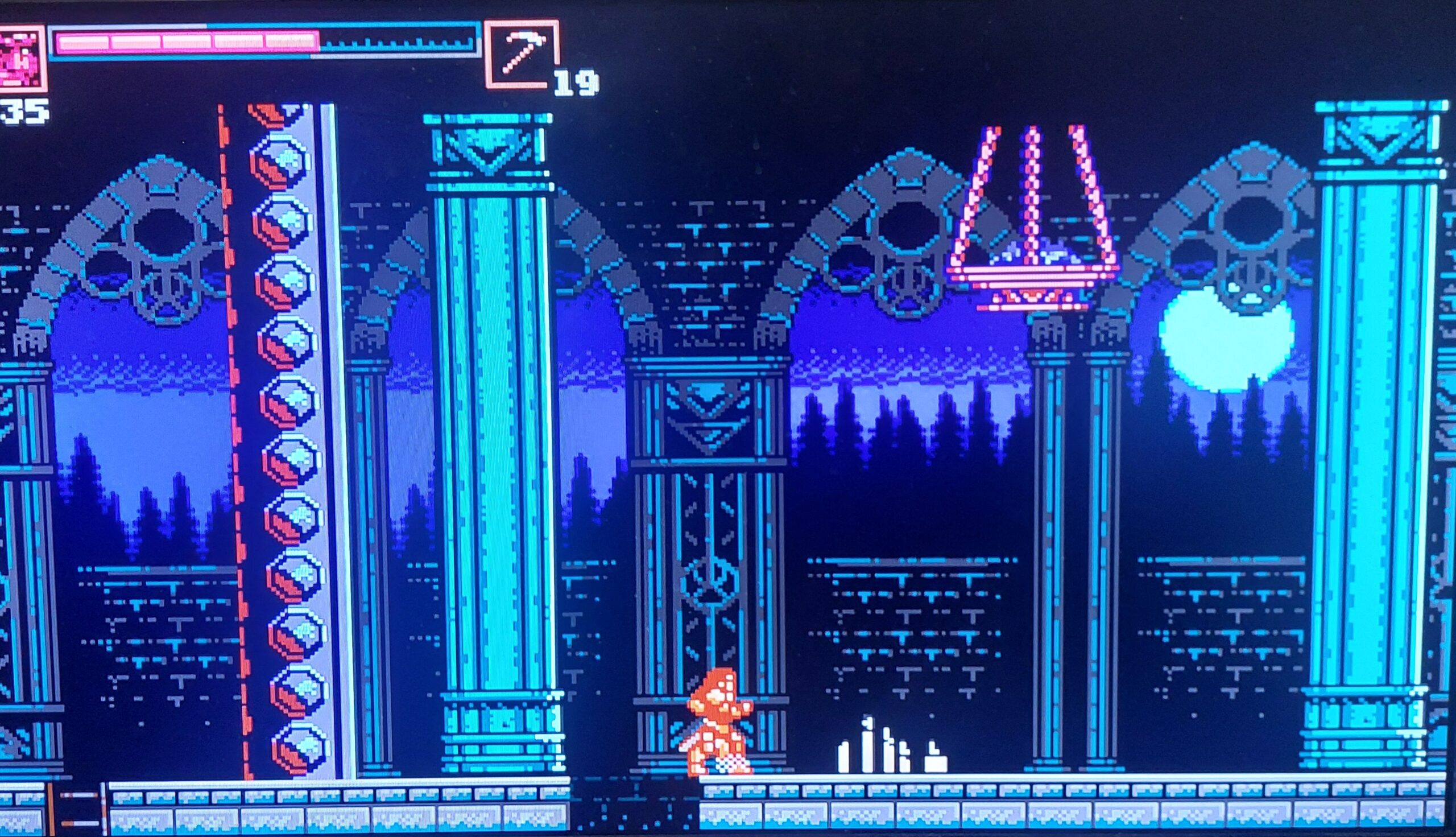
Stumbling across the many games in my collection, I eventually came across Lords of Exile. A game that plays like Castlevania combined with Ninja Gaiden, I was hooked from the moment I started playing.
Whenever I come across a game that reminds me of the classics I grew up with, I can’t help but want to share the experience with other gamers.
One of the first things that stood out to me was how easy the game was to pick up and play. Sure, there are a few simple instructions to help you get started, but nothing that requires a lot of memorization, and that’s something I really appreciated.
Before long, however, I realized there was much more to the game than its simple beginning.
One of the biggest lessons I learned during my playthrough was that the bosses become much easier once you understand their attack patterns.
Yes, you’re going to die along the way, but every defeat teaches you something. Each attempt helps you improve your timing, your movement, and your understanding of the fight, and all of those things matter.
If you’re getting ready to play Lords of Exile for the first time, don’t let the opening of the game fool you. As I like to say, judging a book by its cover can and will get you cut by the pages. The game gives you room to learn, but it’s also going to make you earn every victory.
There are also a few helpful mechanics that can make your journey easier, but I’ll talk more about those later. More than anything, I wanted to write this article because I recently finished the game and wanted to share the lessons I learned along the way.
My hope is that by the end of this article, you’ll know the do’s and don’ts of playing Lords of Exile and be better prepared to get the most out of your own adventure.
Learning the Level Is The First Victory –
My first impression of Lords of Exile was a little mixed—not because the game was bad, but because after playing games like Castlevania, Mega Man, and Ninja Gaiden for years, there wasn’t much that truly surprised me.
Even so, it didn’t take long for me to realize that while the mechanics felt familiar, the game had its own identity. It eases you into the adventure before gradually turning up the heat.
One thing that did surprise me was the game’s Mega Man-style ability system. Every time you defeated a boss, you earned a new ability.
Those abilities weren’t designed to make the game easy, but they did make exploring and progressing through the later stages much more manageable.
The enemies also demanded more respect than I expected. While some were easy enough to dispatch, others—like the golems—forced me to change my approach.
Their attacks were difficult to avoid, especially when I tried to stay aggressive. They taught me that sometimes patience is just as important as offense.
I couldn’t help but think back to the original Castlevania. You break candles, collect power-ups, fight your way through zombies, and eventually make your way to Dracula’s front door.
Lords of Exile takes a different approach. Right from the beginning, a guard stands outside the gate, making one thing perfectly clear: you’re not rushing past him.
To me, that guard delivers a subtle but obvious message: rushing through this game isn’t an option. Taking your time, paying attention to your surroundings, and moving when the opportunity presents itself will carry you much farther than charging ahead.
The more I played, the more I appreciated that familiar blend of Mega Man, Castlevania, and Ninja Gaiden. Despite a few difficulty spikes that challenged me along the way, I never stopped enjoying the experience.
By the time I reached the end, Lords of Exile had earned a place among my favorite retro-inspired action games.
5 Key Things I Took Away from The Levels I Got Through –
One of the biggest lessons I took away from the levels was the importance of staying alert. Just because things had calmed down or there weren’t any enemies on screen didn’t mean it was safe to let my guard down.
Level 3 drove this point home while I was climbing the vines through the moving platform section. The archers there made it clear they didn’t want me around, and they weren’t about to make the climb easy.
Another lesson I learned was not to get greedy. Going back to the Golem example, I tried getting up close and finishing the fight as quickly as possible. Instead, I ended up taking unnecessary damage.
Once I started timing my attacks and knowing when to back away, I saved much more health and was reminded that slow and steady really does win the race.
Another lesson was patience. If you’ve played Castlevania II or Castlevania III, then you know how important timing can be. The same is true here.
Once I slowed down, studied the obstacles around me, and stopped trying to force my way through, I began making much better progress. That patience even paid off during my fight against Issa in Level 7.
For me, getting better at a game isn’t really about becoming more confident—I’ve always believed in my abilities. Instead, this game reminded me to trust myself.
Trust my instincts, trust my timing, and trust the experience I’ve built over years of playing games like this. Sometimes that’s all you need to get through a difficult section or a challenging boss.
The last lesson I learned was never to forget the basics. One example is the downward thrust, which is perfect for enemies below you and later becomes even more effective after it’s upgraded. It’s easy to get caught up using flashy abilities and forget the simple techniques that work just as well.
I learned that lesson the hard way while fighting the blue guards with the long spears. What should have been a routine encounter turned into a complete mess because I ignored the basics. I lost far more health than I should have before reminding myself that sometimes the simplest solution is still the best one.
The Level Made the Boss Easier –
The first thing that comes to mind is timing—knowing when to use your sub-weapons, when to capitalize on an enemy’s weakness, and how to use every tool at your disposal.
There were plenty of moments where timing meant the difference between taking unnecessary damage and making it through a fight unharmed.
Each level introduced its own challenges. The Sunken City, for example, constantly tested my awareness with its sinking platforms and environmental hazards.
It also reminded me to react quickly and not forget about the summons I had available. Their energy cost was small compared to the amount of health they helped me save before reaching the boss.
By this point in the game, there were very few surprises left when it came to enemy placement. That brings me back to one of the biggest lessons I learned: look before you leap.
An enemy circling a platform may follow the same pattern every time, but knowing when to move onto that platform is what separates surviving from taking unnecessary damage.
One fight that really reinforced this lesson was Issa, the Level 7 boss. His attack pattern is surprisingly easy to memorize once you stop trying to rush the fight.
After taking enough damage, he’ll float to the center of the screen and launch his giant windmill shuriken. I never counted exactly how many hits triggered the attack, but I did learn to recognize what came next.
As soon as he disappeared and reappeared at the top of the screen, I knew it was time to move into the right corner and prepare for a double jump over the incoming attack.
That strategy sounds simple, but it only worked because I took the time to understand his attack pattern instead of trying to overpower him. What first looked confusing eventually became predictable, and that’s when the fight became much easier.
I don’t think I ever saw a game over screen during my playthrough, but that doesn’t mean the game never threatened one. Years of playing action games certainly helped, but repetition played an equally important role.
The more I saw certain obstacles and enemy patterns, the more natural they became. Even then, I never stopped being cautious. One lesson gaming has taught me over the years is to never underestimate anything. Whatever you choose to ignore will eventually hit you—and it’ll hit hard. Speaking from experience.
I’d Like To Offer Some Advice To New Players –
So, for all of you new players out there who are either coming in from the cold or have, like me, played games like this for years but decided to give Lords of Exile a shot, here are a few tips I think will help.
Not only can this game be challenging, but these lessons can mean the difference between surviving and staring at the Game Over screen.
When you’re fighting bosses, learn their attack patterns because doing so is one of the biggest keys to staying alive. Take the Warhog on Stage 5, for example. At the start of the fight, it’ll open with a barrage of bombs followed by its flame attack.
Don’t worry about getting hits in right away. Wait until the bomb barrage is over, then attack the metal plate on its face. Land a few good hits before getting underneath the boss to avoid its flame breath. Patience is what wins this fight, not rushing in.
One of the hardest things I ever had to accept was that, even as an experienced gamer, I was eventually going to see the Game Over screen. I used to think losing meant I had failed or that I had gotten rusty. The truth was the exact opposite.
Losing is what helps you grow. Every death teaches you something if you’re willing to learn from it. So don’t be afraid of failure. Take each defeat with a grain of salt because that’s often when the “a-ha!” moment happens.
Sometimes all it takes is one mistake to show you exactly what you need to do differently the next time around. Samantha on Stage 1 was one of those moments for me.
Another piece of advice I’d give is to take your time through each level. Walk—don’t run. Pretend you’re out for a leisurely stroll with all the time in the world and nowhere else to be.
Enjoy the scenery, cut down everything in your path, and really soak in the atmosphere. If you happen to die along the way, you’ll already have a better understanding of the level when you come back.
To put a finer point on it, patience makes the road ahead much easier to travel. You’re no longer carrying the weight of trying to play perfectly or expecting yourself to make no mistakes. One of the hardest things to do is simply slow down long enough to absorb your surroundings.
There’s nothing wrong with wanting to get to the next level or see what’s coming next, but patience carves the road ahead—not overzealousness. That’s a lesson Lords of Exile taught me the hard way.
Lessons That Go Beyond Lords of Exile –
Now, Lords of Exile isn’t a complicated game. Can the difficulty spike at different points? Absolutely. But the lessons you learn throughout the game can carry over into other action games, like Ghosts ‘n Goblins Resurrection.
One lesson that’s especially valuable is learning to accept death. You’re going to die—a lot—but every defeat is an opportunity to learn. If you’re willing to pay attention to what went wrong instead of getting frustrated, you’ll come back stronger the next time.
Another lesson is timing, and that’s something that carries over perfectly to games like Contra: Operation Galuga. Enemies are constantly trying to overwhelm you, so knowing when to move, jump, or attack can make all the difference.
Sometimes the hardest part isn’t defeating the boss—it’s knowing the exact moment to avoid a projectile or jump out of the way before taking unnecessary damage.
For a long time, I looked at dying in games as something negative. I couldn’t have been more wrong. Death isn’t failure—it’s a teaching tool. Every defeat has something to teach you if you’re willing to learn from it.
One of the hardest things I ever had to accept was that I was going to die in video games. It doesn’t matter whether you’ve been playing for 36 days or 36 years—you’re going to lose sometimes. What matters is what that defeat teaches you before your next attempt.
And perhaps the biggest lesson Lords of Exile taught me is that observation pays off. Taking a moment to look at what’s happening around you helps prevent mistakes that rushing almost always creates.
Take Contra: Operation Galuga, for example. You’re busy mowing down enemies when you suddenly run over something flashing on the ground.
If you’re only focused on the action, you might never notice the hidden mine until it explodes beneath your feet. Had you slowed down and observed your surroundings, you could have avoided it entirely.
Whether you’re playing Lords of Exile, Ghosts ‘n Goblins Resurrection, Contra: Operation Galuga, or almost any challenging action game, the lessons remain the same: be patient, learn from your mistakes, trust your timing, and always pay attention to your surroundings. Those lessons won’t just help you beat one game—they’ll help you become a better gamer.
Conclusion –
So, to recap, when you sit down to play Lords of Exile, learn the level first. I know it’s tempting to treat each stage like it’s just another obstacle standing between you and the boss, but that’s the quickest way to end up back at the Game Over screen.
Nine times out of ten, knowing where to jump, when to use your downward thrust, and how enemies behave will save you far more time than simply hoping the level works in your favor. Trust me—it won’t.
Always be patient as you make your way through each level because it’s easy to overlook something important when you’re rushing from one area to the next.
Maybe a certain sub-weapon makes a boss much easier, but how would you know if you never took the time to break the boxes along the way? Treat your journey through each level like a leisurely stroll. Slow down, take everything in, and let the game reveal its secrets to you.
And don’t get discouraged when you die. It’s easy to feel like the game is working against you, but I can assure you there’s always a way to survive even the toughest battles.
Sometimes the only way to find that solution is through defeat. It might be something as simple as realizing you got too greedy trying to squeeze in one more hit on a boss. Patience is its own reward—always.
Above all else, remember that preparation is what leads to victory. Difficult games reward players who observe their surroundings, learn from their mistakes, and resist the urge to rush. Lords of Exile has its fair share of difficulty spikes, but every victory feels earned because of them.
Keep these lessons in mind, and you’ll not only have a richer and more rewarding playthrough of Lords of Exile, but you’ll carry those lessons into every challenging action game you play afterward.
Difficult games don’t just test your reflexes—they teach patience, observation, and perseverance. If you’re looking for the games and gear that helped shape my approach to challenging action games, check out my companion Benable list below.
https://benable.com/RoddyMcG/challenging-action-games-that-made-me-a-better-gamer