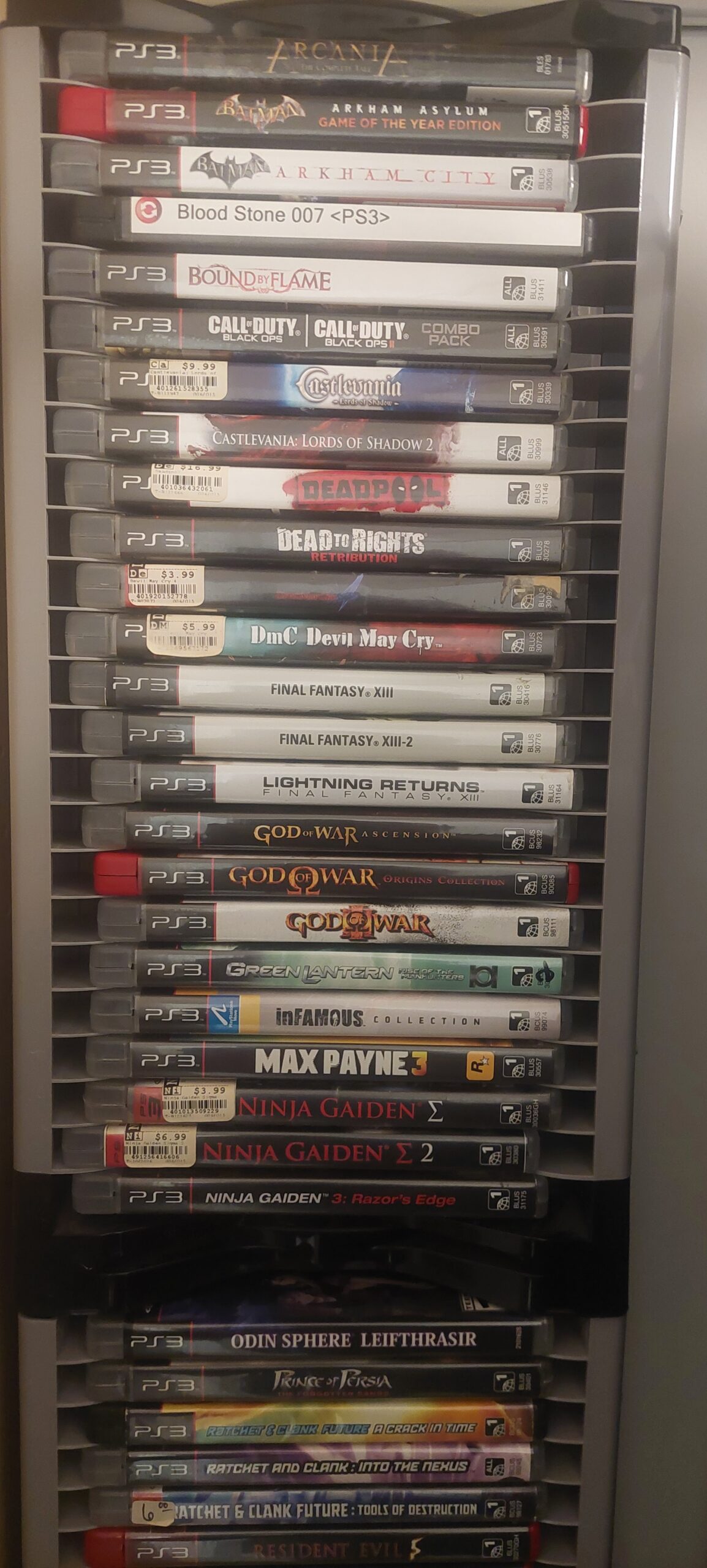
Intro –
My name is Rodney McGill Jr., Expert Gamer extraordinaire. I’ve been gaming for 36 years, and over that time, I’ve played and beaten my fair share of games—numbering in the 1,000s. Hardly an exaggeration.
Anyway, over the years that I’ve been gaming, there have been times when being an experienced gamer has forced me to examine things I ordinarily wouldn’t give a second thought. See, to me, gaming is everything, and no matter what, I always squeeze in and make time for my games.
However, being an experienced gamer, while it comes with its perks, also comes with its downsides. One of the things I have to do is make decisions—tough decisions.
I’m talking about “I don’t want to go to bed tonight if that game isn’t on my dashboard” type of decisions. Sometimes, those decisions involve what to buy, what not to buy, what has earned its place, and what ultimately has not. I mean, yeah, it can be said that making smart decisions about games is easy. I’m going to tell you right now: it is not!
There were times in the past, and even recently, when I had to put a couple of games on hold because even though I wanted them, being smarter about my money mattered more.
I’m here today to argue that even though you don’t want to make those hard gaming decisions, sometimes you have to. I mean, the hardest gaming decision isn’t always what game to buy; sometimes, it’s deciding what you’re willing to put aside for later—and that isn’t easy by any means. I had to do that myself, so I get it.
That said, let’s go!
Wanting a Game Doesn’t Mean I Need to Buy It –
I tried the demos for both The Adventures of Elliot: The Millennium Tales and Onimusha: Way of the Sword, and I was going to make a play for both when payday came. But when payday did come, I couldn’t make the move.
They just sat there on my wishlist. Something inside me said, “Leave them there. Trust me, you’ll get your chance. Don’t rush.” So I decided to go ahead and follow my instinct. To be honest, it hurt making that decision because I wanted those games so much. But just because the games were there for preorder didn’t mean I had to buy them—so I didn’t.
Besides, I have a rule: if it’s over $40, don’t buy it; wait for a sale. If it’s under $40, buy it—especially if it’s closer to $30–$35. I made this rule to draw a line between what I want and when I should buy it. The rule wouldn’t mean anything if I kept making exceptions.
If a game is $59.99 and I really want it, making an exception one time makes it even easier to justify doing it again when I want another game. That’s why I have my rule. Incidentally, the demo can be the difference between deciding that a game is worth playing and deciding that it’s worth its asking price.
Let’s face it: we’re all going to come across that one game that defies pretty much all logical reasoning when it comes to waiting for a sale. But the demo can be the light in the darkness, giving you a sneak peek at the game and allowing you to decide whether it’s worth the price or whether it stays on the wishlist.
Take it from me, leaving something on your wishlist does two things. One, it proves that the control has always been with you, not the excitement surrounding the game. And two, you get to save money instead of regretting the purchase or coming up even shorter later. Trust me, I’ve been in both boats, and the concept of sinking like a stone financially isn’t a concept.
Leaving That ‘Thing’ Alone, Not Easy –
This same discipline can easily be applied when it comes to games that encourage grinding, replaying, or even chasing upgrades. Sometimes, the best thing you can do is leave it alone. Yeah, having that shiny weapon is a big deal, but ask yourself, “A big deal according to who?” Who cares that you got it?
Why should it matter if you don’t get it? Who suffers more if you grind those three extra levels just to be able to crawl away from that battle? When you stop and think about all of that, you’re at the center, and no one else really cares. The decision not to do any of those things lies with you.
An example of this is when I started playing Final Fantasy VI Pixel Remaster, which I’m working on right now. My whole thing is making sure that everyone has healing powers. Now, I’d go so far as to say that I take it further by allowing my key magic users, Terra and Celes, to learn certain spells via Espers.
The thing about this is that making sure everyone has healing abilities is a tradition when I play FFVI because Terra and Celes cannot—nor should they—be the only ones healing. In so doing, everybody can watch their own back, and my magic users can focus on destroying those enemies. However, the line I never cross is trying to make Terra and Celes learn every single magic spell from every Esper.
I want them to be their own person, but I also don’t want them learning each other’s lead spells. For example, I don’t want Celes learning fire magic when she’s strictly ice. Walking away, stopping the grind, and choosing not to do any of that extraneous stuff—that decision is all you. And trust me when I say there are a lot of Espers in FFVI. Yeah, I can fast-track Terra and Celes to their powers, but I choose not to. Mainly, that’s doing too much, and having all of that power doesn’t mean you’ll be able to do anything meaningful with it.
The real experience lies in accepting that you can do everything without trying to do it all.
When I beat my FFVI replay, I can be satisfied because I got my party to where I wanted them to be, not where I was advised they should be.
Discipline Protects the Games I’m Already Playing –
At the end of the discipline is its own reward. For example, going back to those demos I tried. Sure I could’ve bought both games but I didn’t because I wasn’t through with FF6. Plus, I don’t play games half-ass, never have, never will. This is where my self-discipline comes in, I know its there and I can access it anytime I want but I don’t because I like the idea of earning my way, paying my way and not running to the front of the line because I have the permission to do so. It all comes back to making those hard decisions. Yeah, 007 First Light gets DLC that dropped, but playing it means eliminating any chance you had of enjoying it because you decided to skip the line i.e. the game you’re working on. Point of Order: Haste makes Waste.
Take it from me, I’m working on FF6 Pixel Remaster and enjoying the replay as I will my Breath of the Wild replay. Why? Simply, I believe in taking my time going through those games because I made the decision of ensuring that those games get their turn. Yeah, the Playstation games have been calling out to me, but that doesn’t mean I should run for them. Ergo, I’m not. Besides, I’ve been in situations where I’ve chased that next big game. But, what I got from that was a premature, half-enjoyed experience and money loss. There were times when I wouldn’t even get halfway through the 2nd or 3rd level before my crisis of conscious kick in. It goes without saying that protecting your game time is just as important because whether you play or replay a game, one fact remains, you made that choice. Stick with it, that’s a decision too.
Conclusion –
To wrap up, being a gaming authority has afforded me certain perks, but it also has its dark sides—like knowing I can’t act on the urge to buy every game I want at the cost of my self-discipline.
That same discipline keeps me from running after every game that catches my attention instead of simply waiting for a sale. I have 36 years of gaming experience under my belt, but I’ve only been buying my own games for the last 28.
And make no mistake: a lot of times, the hardest decisions aren’t about what your party should look like by the endgame or situations where you don’t know what to do. Sometimes, you know exactly what you should do, and the hard part is having the self-discipline to actually do it—even when you don’t want to.
So take it from me: don’t buy a game simply because your instincts tell you how cool it’ll be to have it. Buy it because you’re being smart about your finances and because you’ve decided it’s a worthwhile investment.
Continue the Adventure
Making smarter gaming decisions doesn’t mean taking the fun out of gaming. Sometimes, it means getting more value out of what you already have while waiting for the right time to make your next move. If you’re looking for a few things that can help you enjoy your current gaming setup without constantly chasing another game, check out my recommendations below.
https://benable.com/RoddyMcG/gaming-essentials-that-help-me-buy-smarter-and-enjoy-what-i-already-own
Leave a Reply