Intro –
Final Fantasy VI is one of the most memorable RPGs in gaming existence, and for obvious reasons. I’m conducting my second playthrough—my replay—and there’s so much to love about the game. Some gamers have called it legendary, and the proof is in the pudding. To me, legendary means the type of game that gives you free rein to do with your party members what you wish—but more on that later.
The memories I have of playing FFVI are a bit scant, but I wanted to replay the game to see how much of that retained knowledge would get me through the game, or at least as much of it as possible. For example, I remembered that the Ultima Weapon isn’t all that impressive when you first get it, but later on, it can become a weapon of terrible reckoning.
I also learned during this replay that Terra and Celes don’t naturally have access to Thunder spells, meaning those spells have to come from Espers, such as Ramuh. To put a fine point on this, spell learning through Espers can coincide with natural spell leveling—but only if it’s something you actually want to teach your magi.
Basically, when I decided to take on this FFVI replay, I came back wanting a similar experience while drawing my own conclusions about what is and isn’t allowed versus what should and shouldn’t be.
For example, just because I can teach my people all sorts of spells doesn’t mean I necessarily should when they have special abilities and identities of their own. I wanted to stick to my guns as far as using my own playstyle choices to ensure that my characters are where I want them to be, both level- and skill-wise.
Personally, a game as legendary as FFVI doesn’t need to justify its reputation the moment you pick it up. The rationale is that you enter from the perspective of already knowing what the game is and why it’s as good as it is. But a replay gives you the opportunity to experience those reasons for yourself all over again.
I come before you today to tell you why Final Fantasy VI, after all this time, still earns its legendary reputation.
The Characters Are the Adventure –
Final Fantasy VI has a large ensemble of characters, and the best part about that aspect is that you can pick and choose who you want to use throughout the game—as well as who you want to bench. For me, I don’t use Strago, Gogo, Gau, Mog, Relm, or even Setzer because I’m just not interested in using them.
I know what they’re capable of, but the game gives me the option to decide who I want in my party instead of constantly forcing me to use characters I don’t care about.
I felt a little pity for the characters I didn’t use, so I thought I would use the replay to get reacquainted with them. But as I went through the game up to my current point, I was reminded why I chose to use only certain characters in the first place. For example, Terra and Celes are my go-tos. Edgar has his Tools, which make him versatile when dealing with different enemies.
Then there’s Sabin and his martial arts abilities, along with Cyan and his Samurai abilities. These are my main crew because the power they bring to the table makes them worth using overall.
Plus, the gameplay aspect of using them is just awesome. When you need to keep Cyan healthy, for example, you’ve got his Dragon ability to drain HP and MP from an enemy—helpful in its own right.
Regarding their personal identities, Terra is half-human and half-Esper, and her Trance ability can significantly increase the damage she deals. Celes is my magic absorber; I use her Runic ability to intercept dangerous magic attacks from enemies.
Sure, Strago is the Blue Mage of the group, but personally, he doesn’t interest me any more than Gau does. I get it: they can acquire personal skills and abilities through enemies, but that’s exactly the part that doesn’t appeal to me.
You have to go out and acquire those abilities, and I don’t find enough of them useful to make me want to build my playstyle around either character. That’s why I stick to my legendary five.
The game gives you the time and space to learn each character and put them in situations where you can capitalize on their strengths. To me, that gives FFVI even more appeal and helps back up its legendary status—something I feel the earlier Final Fantasy games handled poorly by comparison.
Instead of constantly being forced to use certain characters in certain situations, FFVI eventually gives me room to choose my preferred party, which is exactly what I always do.
Strategy Without Unnecessary Complication –
Abilities like Edgar’s Tools and Sabin’s Blitzes, as well as the Esper system, give you a wide array of choices when it comes to how you want your characters to approach challenges throughout the game. For example, I could teach Sabin elemental magic, but then, to me, he’d start becoming another Terra or Celes instead of remaining Sabin.
I like to keep my characters pure—i.e., centered around their own abilities—but I make an exception when it comes to healing magic. Sabin’s Chakra Blitz heals his comrades but not Sabin himself. Edgar has no natural healing ability, so I teach him healing magic as well. I choose to keep things simple; there’s no need to draw outside the lines if I don’t have to.
To me, Terra and Celes already come equipped with healing magic while most of my other characters don’t. I didn’t want Terra and Celes to be the only ones responsible for healing everybody, especially when so many battles require their attention elsewhere. That’s when I decided to start teaching characters like Edgar and Sabin healing magic through Espers.
I might’ve taught Cyan healing magic too, but that was before I remembered that he eventually learns Dragon, which allows him to drain HP and MP from his chosen enemy and restore his own. That’s exactly the kind of ability that lets me preserve what makes Cyan Cyan instead of automatically giving him the same magic as everybody else.
Final Fantasy VI’s straightforward battle system is a shining example of why I believe games don’t need to bury strategy underneath unnecessary complexity. Compared with the earlier Final Fantasy games I’ve played, FFVI gives me plenty of strategic freedom while still keeping the fundamentals simple—and, to me, simple is just plain better.
The Replay Has to Prove The Reputation –
The Espers and their magical help are one thing I’ve approached differently because now I’m at a point where I want to teach Terra and Celes Thunder magic. Before, I didn’t think it was necessary—forbidden, even—but now I’m at a point where I want to teach them those spells because there are still plenty of enemies that are allergic to Thunder.
Experimenting has done wonders for my playthrough because I don’t feel as bound to the game or its rules as I felt I was during my first playthrough. Take Gau, for example. This time around, I benched him and Strago because they’re just too much work for what I want out of my party. I wanted to give everyone a fair chance during this replay, but when characters like them suck, they suck; that’s it. No helping them!
After not playing this game for years, the reason it can still hold my attention is because so many aspects of it are still appealing to me. Terra’s Esper form is OP and has basically become my “in case of emergency” power. Then there’s Celes and her unique abilities, along with those of my other three chosen characters—Edgar, Sabin, and Cyan. Each one of these five makes the game more enjoyable because of what they individually bring to my party. Even Sabin’s Blitzes are far easier for me to pull off now than they were back in the day.
FFVI’s legendary status still holds up because everything that made the game great to me in the first place is still here, but the replay has given me new ways to interact with it. I’m experimenting more, making different decisions, and allowing myself to decide what does and doesn’t belong in my version of the adventure. No matter how many years pass before I come back to FFVI again, I believe it’ll retain that legendary status because the things I love about it haven’t disappeared.
Conclusion –
To wrap up, Final Fantasy VI is and has always been one of the best Final Fantasy games in the series. Mainly, you have the option of playing the game how you want. You’re not bound to specific characters, and you can customize the ones you choose however you like. However, the reason the game is still legendary is because you’re at the center of the choices you make and, to put a fine point on it, the strategies you come up with are your own.
Personally, one of the main reasons I wanted to replay the game was to experiment with different things using different characters. I still have those I choose not to use, but I also have characters I’ve chosen as my go-tos. That’s part of what makes the experience mine. The game gives me the tools and possibilities, but ultimately, I’m the one deciding what to do with them.
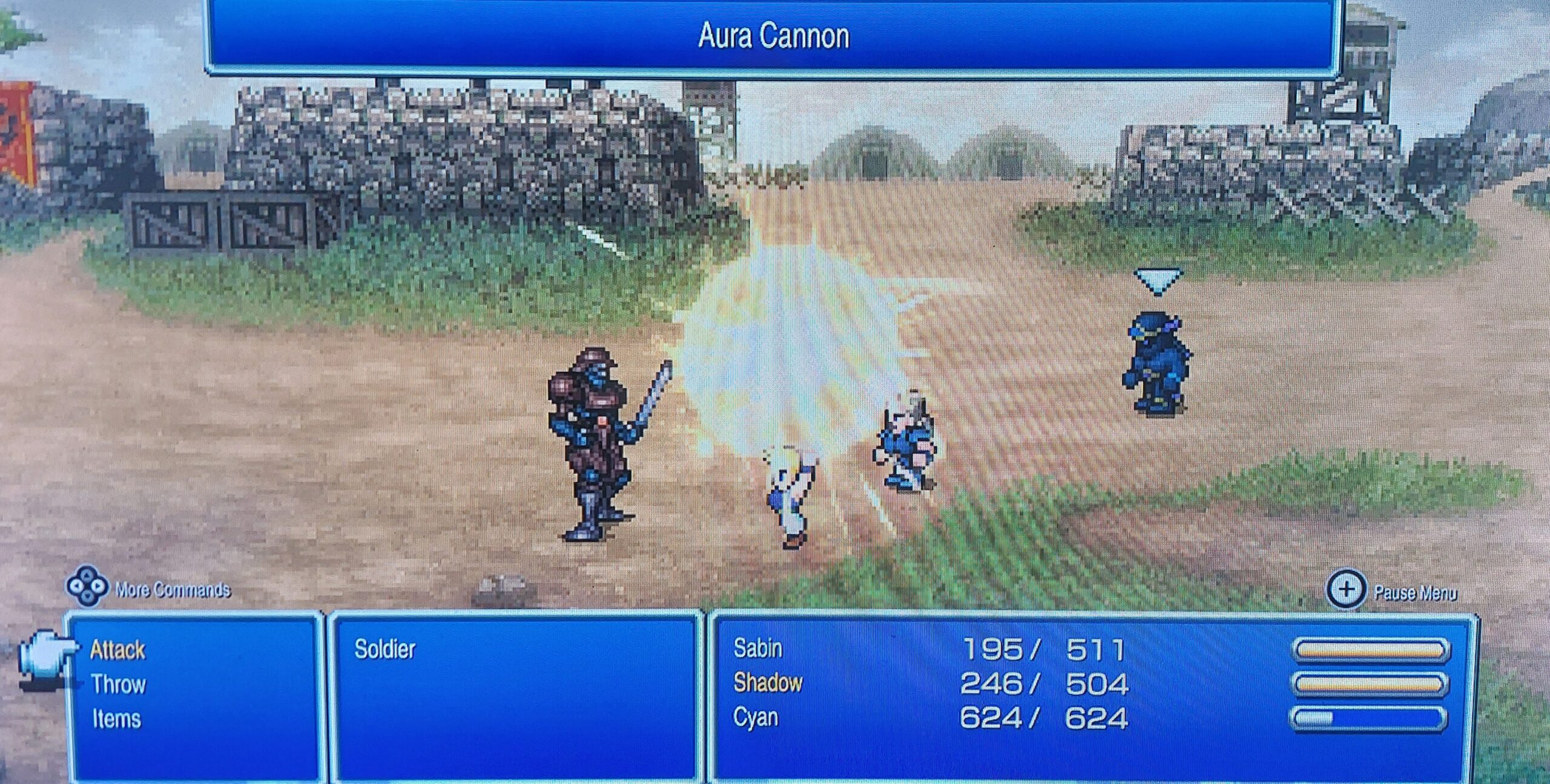
That said, the characters are noteworthy because you’re always going to feel like you’re in control. Whether you’re using Celes to absorb magic with Runic or using Sabin’s Aura Cannon to hit an enemy with holy damage, this legendary game has something for everyone—whether you’re playing it for the first time or replaying it for the millionth.
Continue the Adventure –
Want to make your next RPG adventure even better? I’ve put together a list of gaming essentials that can help you stay comfortable, organized, and ready for those long journeys. Check out my recommendations on Benable and find something that fits your own gaming setup.
https://benable.com/RoddyMcG/gaming-essentials-that-make-rpg-adventures-even-better
Leave a Reply