
Intro –
You know, moving from old hardware to updated versions can be a very difficult thing to do, especially when you believe the hardware you’re holding is the only true way to experience a game.
For a long time—and in some cases, not so long ago—I thought exactly the same way. I was a purist who believed that mixing gaming generations was almost forbidden. To me, the games you bought for a console belonged on that console and nowhere else.
For example, if I wanted to play Jak & Daxter 1, 2, and 3, then I played them on the PS2. Keeping each gaming generation separate meant everything to me. One of the hardest things we gamers can do is change, especially when it challenges what we’ve grown comfortable with.
Sometimes, though, what feels like a betrayal at first can actually be an upgrade for the greater good.
The reality is that gaming hardware ages. Eventually, every console reaches a point where we have to decide whether it’s worth spending a small amount of money on an updated collection or potentially much more trying to preserve aging hardware for years to come.
Today, I want to share my own experience with that decision. If you’re anything like I used to be, you may still struggle with the idea of buying collections or updated versions instead of playing everything on the original hardware.
And that’s okay. Change is hard, and it doesn’t have to happen overnight.
That said, let’s talk about it.
Chasing the Perfect Version, Rod Edition –
From late 2007 to mid-2014, I spent most of my time playing my PS2 and its games. Even though collections and remasters of many of those games were becoming available, I wouldn’t allow myself to embrace them or move toward the future.
To me, the PS2 was the perfect way to experience my favorite games. Looking back, I realize I spent so much time chasing the “perfect” version instead of simply keeping an open mind.
What’s ironic is that while I was searching for perfection, I missed out on some excellent collections, like the Sega Genesis Classics Collection on the PS4.
The problem wasn’t convenience—it was my mindset. I was determined to keep my collection “pure.” If I already owned a game on the PS2, I didn’t want an upgraded version, no matter how good it was. That obsession became the driving force behind many of my gaming decisions.
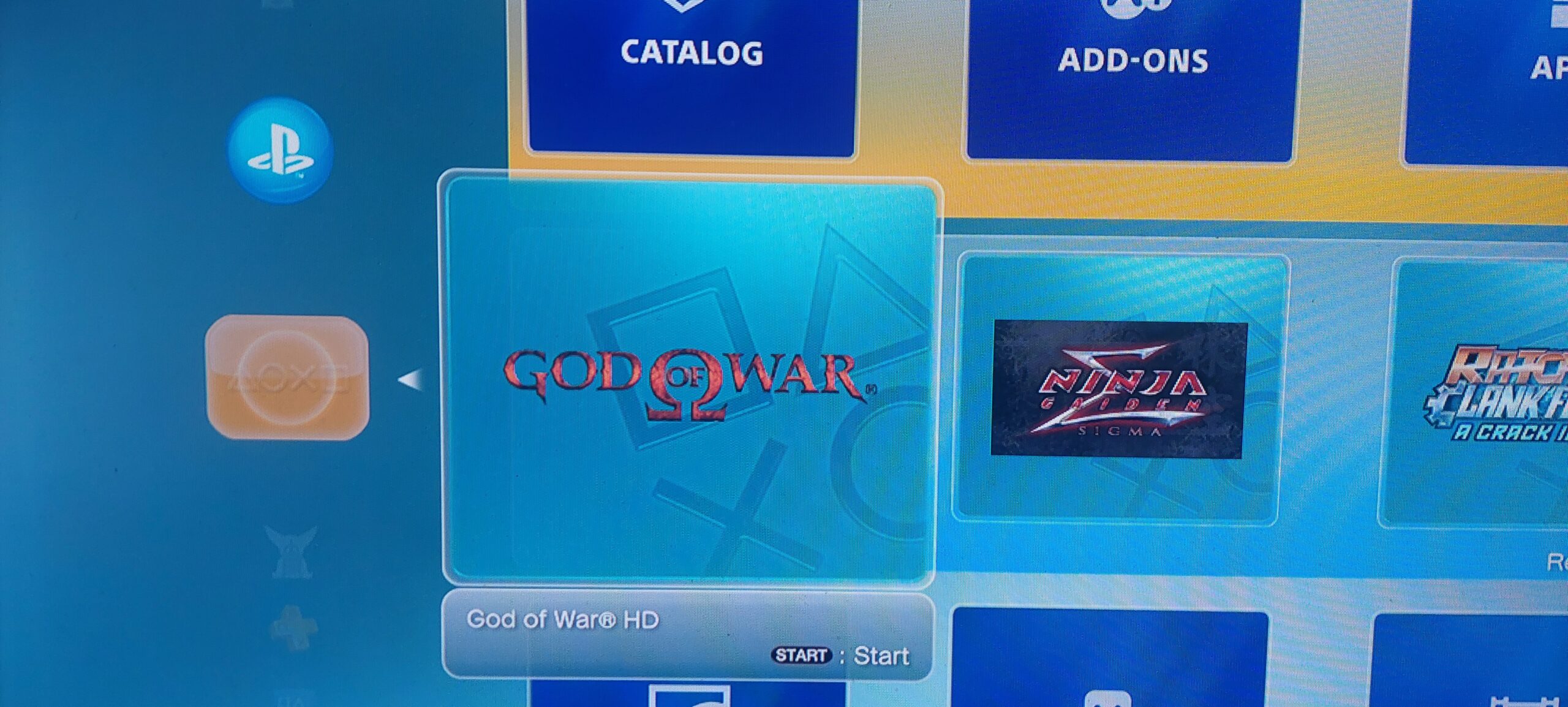
Take the God of War HD Collection, for example. It was available on the PS3, but at the time I had no interest in it. If I was going to play God of War I and II, I wanted to play them on the PS2 and nowhere else.
Yeah, I know—stubbornness at its finest. I’ll gladly admit that.
When the Final Fantasy I–VI Pixel Remaster collection was released, I barely gave it a second thought. I was convinced that playing those games on the PS2 was all I needed.
Looking back, I realize I spent years denying myself the chance to enjoy those same adventures on newer hardware simply because I refused to step outside the boundaries I had created for myself.
For me, it always came back to staying in my lane. I had convinced myself that every game belonged to its original console, and that was the only “right” way to experience it.
One of the best examples was God of War III. I spent years searching for an original PS3 copy. I knew the God of War Saga collection existed, but I didn’t care. I wanted the original release because, in my mind, that was how the game was meant to be played.
The funny part is that I had already beaten God of War III Remastered on the PS4. Even after that, I was still chasing what I believed was the “perfect” copy. Eventually, I found it, but only after spending more money than I needed to, including an expensive shipping charge.
Looking back, I achieved my goal—but at a completely unnecessary cost. of War III Remastered on PS4, I belly ached about looking and having the ‘perfect’ copy of God of War III.
To say the least, I accomplished my goal but at an unnecessary cost which was my bank account combined with paying a high shipping and handling fee to get it delivered. What a waste, am I right?
When Research Replaced Playing –
When the PS4 era arrived, I finally decided it was time to move toward the next generation, including picking up a PS3. As I built a large physical collection for that console, many of the same games started appearing on the PS4 in the form of collections and remasters.
Naturally, I did what I always did—I researched. I compared versions, weighed the pros and cons, and spent countless hours trying to determine which version was the “right” one to own. Instead of enjoying games that were already available to me, I kept myself planted in the PS3 neighborhood.
Going back to my earlier example, there were plenty of times when I had an itch that only God of War III could scratch. The problem was that I convinced myself the only way to satisfy that itch was to play the original PS3 version.
The Ninja Gaiden series was another example. When the Master Collection released on the PS4 in 2021, I didn’t immediately see it as an opportunity. Instead, I spent hours researching it, asking myself, “If these are the same three games, what difference does it really make whether I play them on the PS3 or the PS4?”
Looking back, I realize I was asking the wrong question.
Preservation isn’t just about protecting old hardware. It’s also about making sure we can continue enjoying the games we love. Instead of embracing that idea, I spent more time researching than gaming, and that slowly changed the way I looked at the hobby.
I had convinced myself that I was doing things the “right” way while everyone else was doing them wrong. I watched review after review, listened to endless opinions, and let other people’s arguments influence decisions that should have been my own.
There’s nothing wrong with hearing different perspectives. The mistake I made was allowing those perspectives to outweigh my own experience. I let myself get caught up in debates and complaints from people who simply disliked something because it was new.
Looking back, I wish I had trusted myself more.
Since 2007, I’ve been working on a massive gaming project. The more I reflect on that journey, the more I realize how much further along I might have been if I had spent less time searching for the perfect version of every game and more time simply playing them.
There were games I left on the shelf for days, weeks, and sometimes longer because I was trying to live by my own unwritten “laws” of gaming instead of allowing myself to enjoy the experience.
There’s nothing wrong with loving video games. The problem comes when our love for them turns into an obsession with purity. At that point, respect for the hobby can slowly become a barrier that keeps us from enjoying it.
Today, I believe the version matters far less than the experience. Whether it’s the original release, a collection, or a remaster, what truly matters is that you enjoy the game.
It’s a lesson I wish I had learned much sooner.
The Moment My Thinking Changed –
Several months ago, I woke up with a realization. If I truly wanted to become an authority on gaming, then I had to step into the light, so to speak.
I finally understood that many of the collections and remasters of the games I loved would eventually become just as important to preserving those experiences as the original hardware itself.
That wasn’t a decision anyone else could make for me. I could have just as easily turned my back on the idea of owning collections like God of War, Jak and Daxter, or Ratchet & Clank. Instead, I decided it was time to change the way I looked at them.
I spent a long time wrestling with the idea that there had to be a perfect version of every game. Eventually, I realized there isn’t.
Take the Final Fantasy Pixel Remasters, for example. Yes, they include quality-of-life features, but if you set those aside, you’re still playing the same incredible games. The heart of the experience hasn’t changed.
That realization also changed how I viewed collections like the Ninja Gaiden Master Collection. I know those games extremely well. Playing them on the PS4 doesn’t change what made them great on the PS3.
The enemies are the same. The challenges are the same. The satisfaction of overcoming them is the same. The only thing that changed was the console I was holding.
Once I finally embraced game collections, I stopped agonizing over how I was supposed to play a game and simply started playing it.
I’ll admit it—I made a much bigger deal out of this than I probably should have. But when your thinking is driven by the idea of gaming purity, it’s difficult to accept that another version of the same game can still deliver the experience you fell in love with.
These days, my mindset is completely different. Instead of asking, “Should I buy this collection?” I find myself asking, “Which collection should I pick up next?”
The best example of this came when I played Final Fantasy VI Pixel Remaster. I never finished the game on my PS2, but I finally completed it on my Nintendo Switch.
What surprised me most was that I was well into the adventure before it even occurred to me that I wasn’t playing on my PS2 anymore.
I wasn’t thinking about the hardware.
I was thinking about the game.
That was the moment everything clicked. I realized I wasn’t losing anything by embracing newer versions. I was gaining the opportunity to continue enjoying the games I loved without putting unnecessary limits on myself.
From that point forward, I chose to stay open to collections and remasters because, at the end of the day, what matters most is making progress, creating memories, and enjoying the experience—not arguing over which version is the “right” one.
The differences only matter if we allow them to.
Ninja Gaiden Sigma still punishes mistakes. The Golden Scarabs are still hidden in the same places. The challenge is still there, and so is the satisfaction of overcoming it.
In the end, I discovered there was never a different experience waiting for me.
There was only the same great game, ready to be enjoyed. Scarabs are still in the same places they were a generation earlier.
There is no difference, only the same great experience that comes from enjoying a great game.
My New Rule, Just Play –
After spending so much time overthinking and agonizing over the “perfect” way to play a game—or even a specific game—I finally reached the point where I just put the game in and played.
That really brings my new rule into focus: I’m no longer looking for excuses to stick to a single “correct” way of playing or enjoying games. I just play.
I remember when I played Final Fantasy VI Pixel Remaster for the first time. As a new player, the game had a lot to offer, and it started with simply experiencing its features without overthinking them.
From that point on, I made it my focus to keep one idea at the front of my gaming mindset: there is no such thing as a perfect version of a game—only the version you enjoy.
I have a little over 4,200 games, and I still get enjoyment out of every one of them, even though they’re spread across different consoles. My goal has become simple: to create memories.
Even now, my Facebook is filled with photo after photo of gaming moments from the games I’ve played and completed.
At that point, it stopped being about chasing the “perfect” version of a game. It became about creating memories—like using the Red Mage in FFV, defeating the Colossus in God of War II, or blasting enemies apart in Ratchet & Clank: Going Commando. Those moments matter more than version debates ever did.
I’ve also learned something else: there’s a real difference between trusting your own experience with a game and letting others decide which version is “best.” Whether I’m taking down Cronos in God of War III on PS3 or PS4, the experience itself is what matters most.
Why This Makes Gaming More Enjoyable –
Once upon a time, at the height of it all, I believed a game was measured by how “perfectly” it could be played. That often led to massive amounts of time spent researching instead of actually playing.
I’ve come to realize that spending less time researching and more time playing—and creating memories—is a far better use of gaming time.
Gaming becomes more enjoyable when you stop overthinking what makes certain aspects of a game “important” and just experience them for what they are.
And if I’m being honest, too much research often becomes wasted time, because when you finally play the game, you realize that the real value was always in the experience itself, not the preparation.
Besides, that’s why it’s called video gaming—not video game researching all day. These days, I try to spend as much time as possible with my games, whether it’s PS2, PS4, or PS5. Once I start a game, I get invested in it and push through from beginning to end.
I don’t like wasting time. That has always been a core part of how I operate. So when I play, I tend to absorb everything the game offers without constantly stepping outside of it.
For me, there’s no “until I get bored.” I usually commit from start to finish, and that focus helps me get fully immersed in the experience—almost like everything else disappears except me and the game.
And that’s also why I prefer developing my own strategies and approaches. I like figuring things out myself rather than watching someone else’s playthrough or relying on outside solutions.
Even when I hit a rough patch, I’ve made a conscious decision not to immediately turn to YouTube or guides. Instead, I work through it my own way.
At the end of the day, no two players will experience a game exactly the same way. Everyone builds their own strategies, their own rhythm, and their own understanding of how to play. That difference is what makes gaming personal.
Looking Ahead –
The change in my gaming philosophy now guides every decision I make. If there’s a collection for an older game that offers a new way to experience it, I’m open to buying it. I’m done spending hours researching when I could be playing and enjoying the experience instead.
Creating memories has become the core of how I approach gaming. When I think about how life is unpredictable, I sometimes ask myself what games I would want to remember most.
Apologies if that sounds morbid, but gaming memories aren’t just a concept to me—they’re real experiences that stay with you. If you love gaming enough, those memories become just as meaningful as anything else in life.
Right now, I’m working my way through Final Fantasy V Pixel Remaster, and I’m not focused on 100% completion or collecting every chest in every area.
I’m not even worried about learning every Blue Magic skill, especially since some of them aren’t worth my time. I’m letting the experience guide me instead of forcing myself to check every box.
I remind myself that collectibles are often a dime a dozen. What matters more is not robbing yourself of the experience of actually playing the game.
When you play a game, the goal should be simple: enjoy it, experience it, and fully immerse yourself in it. Find what works for you, carve your own path, and let that experience shape how you play.
And even if you turn that into something greater—like helping other gamers through your writing—do it knowing you’re still playing the game your way, and encouraging others to do the same.
Conclusion –
My takeaway is this: when you stop chasing the “perfect” version of a game, the time you once spent researching turns into something else entirely—a deeper connection with the game itself.
Looking back on the years I spent overthinking versions and choices, I realize that choosing to simply play is what made gaming enjoyable again.
Moving forward, this is how I approach everything related to gaming. I no longer do it based on someone else’s perspective or how I think it “should” be done. I do it from my own experience, in my own way.
That, to me, is the greatest lesson I’ve learned from changing my gaming philosophy.
Some games become more than just playthroughs—they shape how we experience gaming itself.
This is a collection of games I’ve played and reflected on through my own approach: no walkthrough reliance, no chasing perfect versions—just real gameplay experiences across generations.
Each entry represents a moment, lesson, or memory from playing games my way. Check it out here, https://benable.com/RoddyMcG/games-i-played-my-way-personal-gaming-experiences-across-generations