Intro –
Normally, when you play video games, there’s always something telling you what to do or giving you an idea of how to go about doing something. For example, when you first enter a particular level or stage, you already get the idea that you’re supposed to proceed until you can’t anymore. That gives you a sense of excitement about where you’re heading and what might be waiting for you. You know enough to keep going without knowing what’s waiting on the other side.
However, like most things, this can become a double-edged sword. Sometimes that excitement can become a deterrent when there aren’t enough clues pointing you in the direction you’re supposed to go. Imagine entering an abandoned village without a soul in sight. There’s certainly mystery there—but what are you supposed to do once you arrive? If there’s nothing pointing you forward, mystery can quickly become confusion.
If I’m being honest, Vigil: The Longest Night taught me that there’s a thin line between mystery and confusion, especially when you don’t have a clue about what to do or where to go. I come before you today to make that line known: mystery is not knowing what’s next; confusion is having no idea what to do next.
Mystery Should Make Me Want It –
Anytime I play a game, I have to have some kind of something that gives me just enough information to draw my own conclusion. For example, when you get Cetacea in Dragon Quest XI, you’re not necessarily told everywhere you should go.
However, you can see floating islands in the distance, which allows you to draw your own conclusion: “Hey, let me stop there and see what’s going on.” The game doesn’t have to tell me what’s waiting there. Seeing the islands is enough to make me curious.
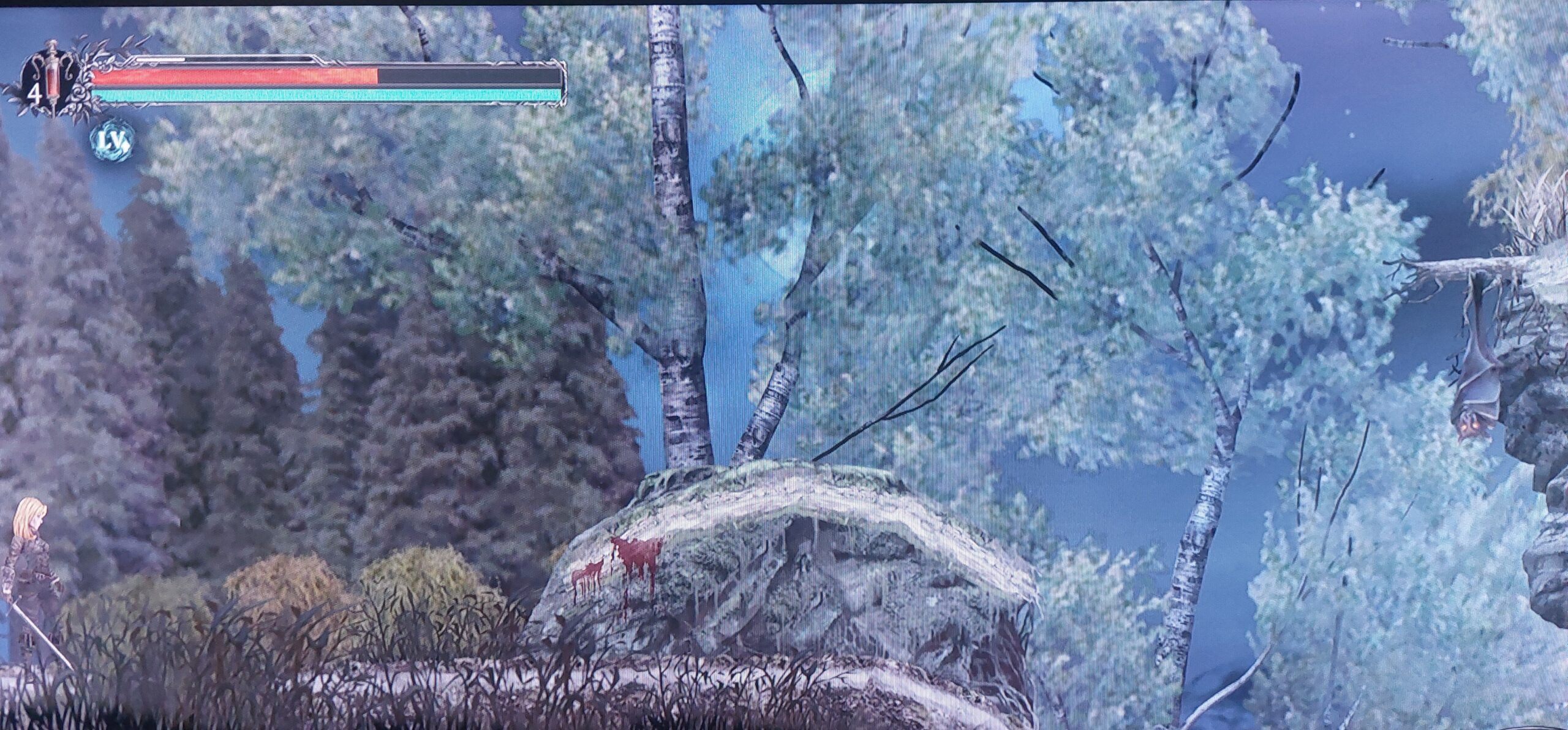
Vigil: The Longest Night didn’t give me that same feeling. A couple of NPCs would tell me to go see someone, but I wasn’t always clear on where I was supposed to go. This frustrated me because the clues were scant. I didn’t need the game to hand me the answer, but I needed enough information to point me toward finding it.
At one point, I was briefly told about a waterfall, but I didn’t understand why it was important or what I was supposed to take away from that information.
After talking to the NPCs, I found myself roaming around town for several minutes trying to find some clue about what I should do next. That’s when I started realizing that I wasn’t investigating a mystery anymore—I was trying to figure out what the game wanted from me.
Confusion Begins When The Game Wants Me To Figure It Out –
Over time, I found myself wandering around Vigil trying to figure out what to do and when. The Notes were no help, and the clues I was given didn’t seem to point toward anything in particular. Not knowing the answer yet is one thing.
You could be given two clues about the same place, for example, and use them together to figure out where you need to go. But when Vigil barely painted a picture of what I was supposed to be doing, I was like, “What the hell?!”
Shortly after I arrived in the first town, I started talking to the NPCs, and there wasn’t much mystery for me to unravel. Instead, I was getting things like, “Go see this guy,” while another guy was talking about being a legend or whatever.
I just felt completely out of sorts. But the thing that really killed me was that the game didn’t carve enough of a path for me to follow. I was told, “I hear noises in the cemetery.” So I went to the cemetery, found high ledges that appeared to require a double jump, and didn’t hear the noises I had gone there looking for.
The way I figure it, if you paid for a game, it’s the game’s responsibility to give you enough of a clue to fill in the blank when one surfaces. It doesn’t have to fill that blank in for you.
Going back to my Dragon Quest XI example, there was always a way forward. When I went looking for Veronica’s sister Serena in the Crypt on the Hotto Plains, the game didn’t need to simply tell me exactly where Serena was. Veronica gave me a clue, and I followed it. That’s what I felt Vigil wasn’t doing for me. not do.
Conclusion –
To wrap up, games are all about making sure you get your money’s worth, and part of that comes from being pointed in the right direction when the time calls for it. A little mystery is key because it leaves you hanging just enough to feel like you figured something out on your own. Accomplishment!
A little guidance is well regarded in my book because it gives you a reason to explore and discover things on your own. Sure, there are going to be times when something might feel too easy or you’re being lured somewhere outside of wherever you were originally heading, but there should be enough information to make that destination mean something once you get there.
I’ve played my fair share of games, and many of them DO NOT follow what I experienced as Vigil’s algorithm of “find out what you need to on your own and be rewarded.” A bigger waste of my gaming time there never was!
Even in earlier games like Dragon Quest VIII, after leaving the Maella Region and heading toward Simpleton, talking to people can subtly reveal where your journey is taking you next. A little something is enough to draw a conclusion. In my experience, Vigil didn’t give me enough of that.
Overall, if I’ve spent 10+ gaming hours trying to figure out what a game expects from me rather than actually enjoying figuring things out, I’m putting it down. Video games can be frustrating enough in their own right; I don’t need confusion helping them along.eir own right, you don’t need help with that.
Continue the Adventure
Mystery is one of gaming’s greatest tools when it’s used correctly. Give me enough information to start asking questions, then stand back and let me discover the answers.
If you’re looking for games that understand how to keep you curious without completely abandoning you, check out my Benable list: 15 Games That Know How to Keep You Guessing Without Getting You Lost.
https://benable.com/RoddyMcG/15-games-that-know-how-to-keep-you-guessing-without-getting-you-lost
Leave a Reply