Intro –
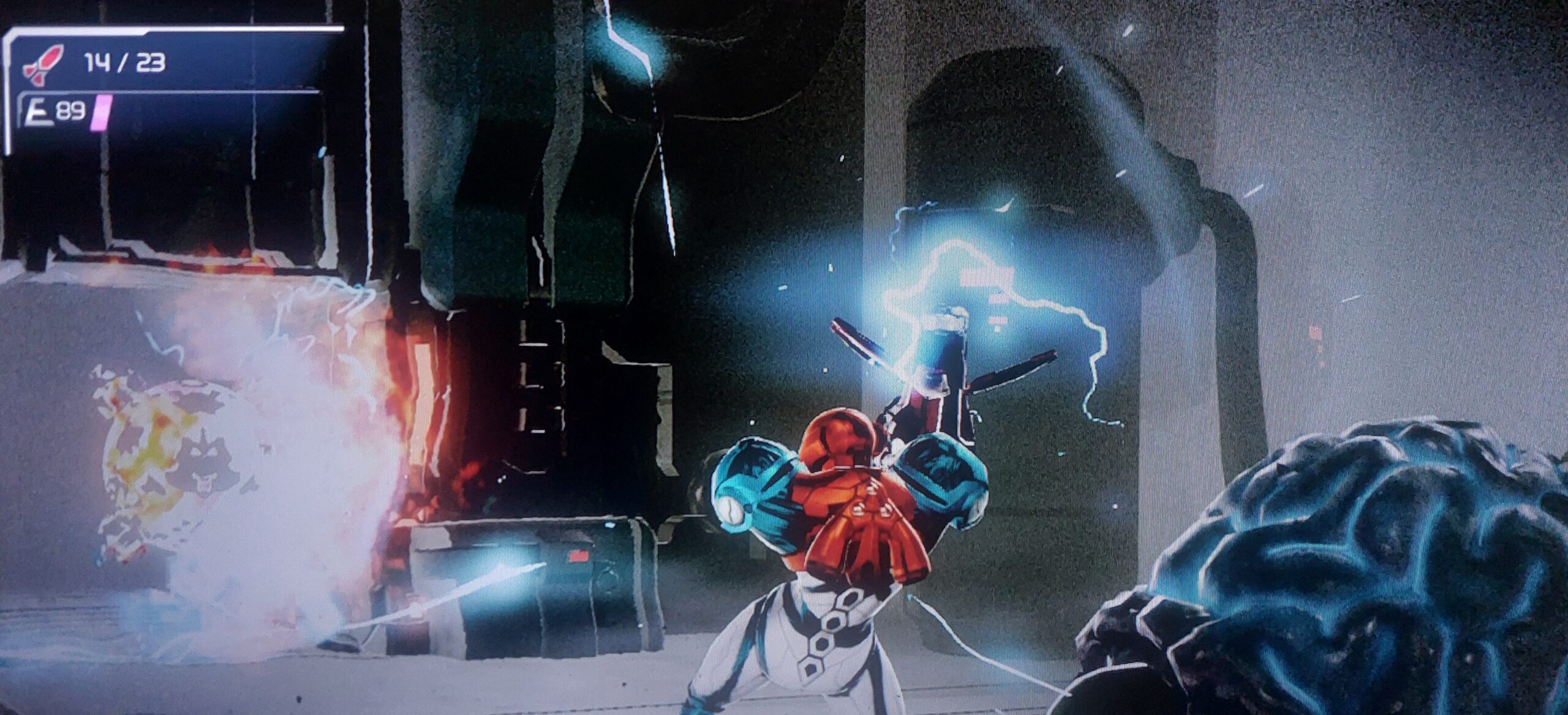
In many games, lead characters have begun powerful and O.P., only to later end up completely powerless. I’ve come across this in so many games, including the one I’m replaying through right now—Metroid Dread.
I remember that in Super Metroid, gathering everything and beating the game, especially with the Hyper Beam, made me unstoppable, as it did a lot of gamers. However, along the way, we all know how so many years pass and lead characters like Samus eventually get their stuff taken away for some unknown reason. Have I always wondered why? Yes.
I’ve grown to understand why this is—or why it must happen. Developers do this as a means of sending a message: “Starting off with the powerful stuff? Yeah, right. Do the work.” The message is quite clear and very logical. If most characters got to start with all of their powers and abilities, the game wouldn’t be challenging. It would just be Super Mario Bros. from a futuristic perspective.
Incidentally, the benefit is tied to progression, and I think another aspect of this is that it’s not about earning the same things twice. It’s more about earning something new that’s different from what you had. New challenges demand new stuff.
Sequels where characters are able to use everything from the last game would create a headache for the gamer because, even though you have everything from the previous game, there’s no guarantee that everything you have will be able to put a dent in what’s in front of you.
I come to you today to argue why being stripped of your power and rebuilt anew is a necessary evil. It’s not always logical, but it is necessary.
Starting Over Leads To Progression –
This is one of those things where you don’t see the logic at first because it’s kept in the context of being ready for anything. Again, making it make sense—check. However, for a sequel, this is absolutely where starting over is love, so to speak. I say that because
I don’t want to be standing in front of an E.M.M.I. with a fully powered Wave Beam from Super Metroid, hoping it destroys the thing outright. And even if it does, the reward system wouldn’t really be the same because there would be dangerous overlap. Challenge factor—watered down as fuck! Not cool, man.
Take Mega Man 11. What if he went into Dual Override? Yeah, I know about that. Anyway, imagine Mega Man carrying his Gear System from Mega Man 11 alongside his new power-up—or his “dual” form—in the new game.
Sure, you’d get a superpowered robot, but it would come at the cost of the new strength potentially becoming completely meaningless. You’d create a paradox in which the old power makes the new seem more like decoration than something with an actual use in the field. Would I have liked for Samus to enter ZDR with her abilities from the last game? Sure.
But I also like to fight with my food as I’m eating it, so the way forward should feel like putting in the work is necessary—and satisfying.
Besides, every new game or sequel was created to make sure you get new stuff, and yeah, the anticipation has always been worth it. I remember when I started Final Fantasy VII Rebirth. A lot of the materia you can potentially find in the beginning of the game is gone at the start of Chapter 2 because it was never meant to be yours permanently.
Between Sephiroth—who I suspect was hoarding it—and what was never meant for you to keep, that loss leaves room for what you can find, what is possible, and above all, what is necessary.
The Reset, Absolutely Necessary –
Starting over can feel unfair, and it can come in the form of, “Okay, let’s see what I can do with what I have now,” only to realize you can’t do what you expected. Progression is the name of the game. You may have the Hyper Beam, but after you get off-world, the power dissipates or it’s no longer needed for the purpose in which you got it—especially if the new planet, area, or game forbids its use.
When you know what you can do with an endgame power-up of that caliber, you stop caring about how long it takes to do anything in the game. The Hyper Beam can turn a 10-minute boss fight into a three-second slap in the face. Where’s the Equivalent Exchange?
Personally, games are and aren’t obligated to explain what happens to your hero’s abilities, and I like it that way because I enjoy being able to form my own conclusions. Whether they’re right or wrong is irrelevant.
For me, it’s enough to know that somewhere nearby, there’s something with my name on it that’ll allow me to get through those underwater areas and keep out of the beeline of those stupid E.M.M.I.s. I’m really beginning to hate those things. Honestly, if I did know exactly what happened to everything, I might feel a little less inclined to care about why learning new stuff would be necessary.
Relearning the same abilities might seem like a noticeable flaw, but think about the necessity. I’m in Burenia on my second visit, and I’m back there with more power and on the hunt for the Gravity Suit.
Yeah, Samus has had a Gravity Suit before, but there’s no guarantee that the previous one would’ve served any other purpose than being a suit enhancement.
As I said, certain zones or obstacles can make it difficult for you to progress or outright forbid the use of that thing. Besides, there’s something satisfying about getting something new that replaces the old.
And yeah, any reset that allows you to start from scratch with a little advantage? Great. Contra: Operation Galuga is a prime example. You can use your pre-game perk points to put a weapon in your blaster before you start the game.
Good—but what happens if you lose that weapon within the first 10 seconds? I’ll tell you what happens: you start feeling cheated, like you wasted money on something that was never meant to be yours to wield from the beginning.
Again, progression. Working toward those “power tools” gives you perspective on what you have to do to keep them—or how to make them work for you.
Getting Stronger, The Right Way –
Sequels are different games from the ones that came before them, and developers have the right to approach each game differently. Take Castlevania: Symphony of the Night. At the beginning, Death takes Alucard’s equipment, and you have to rebuild from there. Along the way, you start finding new items and weapons while learning—or relearning—different abilities.
Despite SOTN being a direct sequel to Rondo of Blood, it still illustrates how one game can establish a powerful character and another can make you build that power differently. Rondo of Blood follows Richter Belmont, while SOTN shifts the focus to Alucard. Different hero, different abilities, different progression—but the previous game’s accomplishments still happened.
In terms of familiar abilities, Mega Man X2 comes to mind. X retains the Dash from the previous game, but having that Dash doesn’t mean you’ll get from the opening factory level to Sigma’s hideout instantly. That’s not how that works.
You have the Dash, sure, but it still limits what you can do and reach. Only by finding new upgrades can you expand what X is capable of doing, including gaining additional mobility from the Leg Parts.
Starting with a familiar ability doesn’t mean that ability is going to help you in every situation the way you think it should. Sequels building entirely around everything gamers already know from previous games could complicate their entry into the new one because no two games are exactly alike. Sigma’s fortress in Mega Man X isn’t the same experience as what you’re facing several games later.
The object isn’t whether you should keep every old power, but seeing what you can do without it. The Ratchet & Clank games are prime examples. You can have weapons maxed out and mow down everything in front of you, but then you can reach a point where firepower isn’t the solution.
Maybe you once had Clank’s help getting across gaps, and now Ratchet has to find another way forward without him. Yeah, Ratchet always has a way, but progression counts on him either doing it himself or finding another means, like he had to in A Crack in Time. Progression shouldn’t stop because old powers stop existing. New games and sequels can always invent new ways for progression to continue.
Conclusion –
To wrap up, losing your abilities in a game doesn’t mean that you’re powerless. You’re powerless for the moment, which will inevitably lead to new strength. That’s not necessarily bad; it just means that you have to expand your power set to get anything done. That’s the natural order of gaming.
New progression requires sacrifice—an offering, if you will, of the old strength. Because as I mentioned, just because you have a superpowered sword or a character at their peak doesn’t mean there won’t be obstacles that make that power meaningless. As far as handling characters and their abilities between games, there’s no right or wrong way. It’s Dealer’s Choice, if I’m being honest.
Besides, there’s no gaming law that prohibits developers from sending the lead character into the next game with powers from the previous one. For example, take Ninja Gaiden Sigma versus Ninja Gaiden Sigma 2.
I don’t need every ability or Ninpo from the first game following me into the second because I want to see, as an experienced gamer, what I can do without everything I previously relied upon. There’s always going to be another power to collect or another tool to master that keeps progression from becoming stale and keeps the experience interesting. The developers make the rules, and the sequel dances to their tune.
In the name of progression, a price must always be paid!
Progression doesn’t stop when one adventure ends. Check out my Benable list for gaming gear and accessories that help me stay ready for whatever challenge comes next.
https://benable.com/RoddyMcG/gaming-gear-that-keeps-me-ready-for-the-next-challenge
Leave a Reply