
Intro –
As far back as I can remember, playing video games has always been my favorite past time — that didn’t change as I got older.
Recently, I started revisiting many of my retro games as part of a massive gaming project I’m working on.
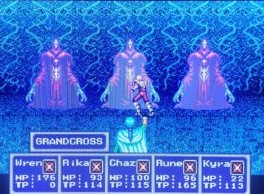
Phantasy Star IV is one of those games, and after replaying it, I can honestly say that everything has changed — and nothing has changed.
I first played Phantasy Star IV in my late teens during the mid-90s, and I beat it back then. I recently completed another playthrough, finishing it just last night.
Going in, I expected to breeze through the game because I know it so well. I thought memory alone would carry me from start to finish.
Instead, I quickly realized that present-day me plays very differently than 16-year-old me ever did.
I wasn’t able to charge through the game at the same hyper pace I once could. I had to adapt, rediscover old strategies, and create new ones.
One of the biggest examples was learning when to retreat from dangerous areas, return to town, restock, recover, and then come back stronger.
That’s the strange magic of replaying retro games in 2026: they feel familiar, yet completely different at the same time.
Phantasy Star IV can still challenge you today. It won’t hold your hand, but it will absolutely make you earn your progress.
Body –
What I think Phantasy Star IV does better than many modern titles is that it never assumes you deserve success.
It doesn’t hand out progress for simply showing up, and it doesn’t reward you just for being present. Mistakes matter, and learning from them is part of the core experience.
Failure isn’t a punishment here—it’s part of the game’s design. You learn through trial, adjustment, and smarter decision-making. That’s something many newer games have moved away from in favor of convenience.
That said, some aspects of the game have definitely aged poorly. One of the biggest is the constant battle interruptions.
The game often throws you into encounters so frequently that it can feel less like challenge and more like annoyance.
Even in 2026, during my replay, I found myself thinking that fighting enemies I had already defeated hundreds of times added very little to the experience.
Instead of creating tension, it sometimes slowed the pace to a crawl.
At times, it felt like the game was swatting your hand for losing focus—even for a moment.
Still, I have a huge respect for the overall design philosophy. Beneath the random encounters is a game that expects you to understand and use every tool available to survive.
That includes party synergy, resource management, and especially the combo techniques that reward smart planning in battle.


Another underrated strength of Phantasy Star IV is how much it rewards exploration, curiosity, and even simple interaction with NPCs.
Talking to strangers and relying on their generosity isn’t just flavor text—it directly shapes how strong you become.
Some of the best equipment in the game comes from those moments of trust, like the Thunder Claw and Genocyber Claw, which still feel powerful and memorable today.
One of the hidden design strengths is how many weapons double as usable items with special effects. Instead of being static gear, they often carry techniques that can be triggered outside of combat in creative ways.
For example, the Guard Rod found in the Strength Tower on Rykros can be used as an item to restore a small amount of HP to your human party members, thanks to its built-in Sar technique.
It’s a small effect, but in longer dungeon runs, it matters more than you’d expect.
Another great example is the Moonslasher. When used as an item, it casts Bindwa, a technique that can prevent enemies from acting for 2–3 turns.
It’s not universally effective—machine-type enemies are immune—but against organic foes, it can completely shift the momentum of a battle.
These kinds of mechanics are part of what make the game feel deeper than it first appears. You’re not just collecting weapons for raw stats—you’re learning when and how to use them in smarter ways.
Overall, my opinion of the game hasn’t changed drastically, but it has matured. It’s still a very challenging RPG, and that challenge feels intentional, structured, and still rewarding even today.
The Focus –
At a certain point, though, I still find myself getting mentally worn down by the constant encounters—fighting the same enemies I’ve defeated countless times.
Back when I first played Phantasy Star IV as a teenager, I didn’t really think of it as a particularly difficult game. But coming back to it nearly 30 years later, my mindset has changed completely.
I’m now the kind of player who thinks, “Don’t sell that Guard Rod,” or “Buy 10–20 Trimates—you’re going to need them.” I’m also more cautious about things like holding onto Wren’s unused weapons and swapping them depending on enemy weaknesses and resistances.
My overall opinion of the game hasn’t changed much—it’s still challenging, sometimes even a bit over the top—but it remains absolutely worth playing even by modern standards.
What stands out to me now is how the game balances difficulty with steady character growth.
Yes, you’re fighting familiar enemies over and over, but you’re also constantly leveling up, improving stats, and reaching a point where earlier threats start to feel less dangerous and more like obstacles to manage efficiently.
During this replay, I also noticed how much I found myself over-preparing—stocking up on healing items, planning ahead for difficult encounters, and being far more strategic about when to conserve or spend resources.
At the same time, I still had to rely on core survival instincts when things went wrong in battle, especially when party members went down unexpectedly.
One thing I think many modern players might overlook is just how transferable the game’s mindset really is. I used to believe I could play it the same way I did as a teenager—but I can’t.
My approach has changed. I heal more carefully, I conserve key abilities for boss fights, and I plan item usage much more deliberately.
And that kind of thinking still applies today—not just in retro RPGs, but in modern strategy-heavy games like Demon’s Souls, Elden Ring, and even games like Yu-Gi-Oh! Master Duel.
Strategy isn’t something you use once and forget—it’s something you refine over time. As long as you’re playing games, you’re learning how to adapt. And that, to me, is one of the most lasting lessons this game still teaches.
Conclusion –
So, my takeaway from this replay is that Phantasy Star IV is still absolutely worth playing today because of its challenge and its ability to force players to actively apply what they’ve learned.
Revisiting it after so many years makes you rethink your approach.
It pushes you to adjust strategies in ways you might not expect—like equipping Rune and Raja with dual shields instead of rod weapons, since their magic output is far more valuable than their physical attacks.
That’s part of why so many retro games still hold up today. The knowledge you build from them doesn’t fade—it stays useful. Even in modern gaming, those patterns and lessons still carry over.
Take something like Mega Man 4 as an example. Remembering enemy weaknesses, using the correct special weapon, or relying on the charged shot to deal massive damage all become part of a mental toolkit you don’t really forget.
It’s easy to get swept up in modern games, but returning to retro titles gives you a different kind of focus. There’s a mental sharpness that comes from relearning systems you thought you already mastered.
For me, replaying these games—especially Phantasy Star IV—has been about measuring how my approach to gaming has changed. Sometimes I improve strategies, sometimes I abandon old habits entirely.
Either way, there’s always an “X factor” that forces adaptation, whether the game is modern or decades old.
Even with its flaws, I still consider Phantasy Star IV a masterpiece.
It’s a game that deserves to be played today, especially if you have access to collections like the Sega Genesis Classics or Sega Mega Drive Classics.
Don’t sleep on it.
Next, I’ll talk about why modern collections of classic games matter, and why I think they’re one of the best ways to keep retro gaming alive today.
If you want to play Phantasy Star IV today, I put together a quick guide here:
https://benable.com/RoddyMcG/best-ways-to-play-phantasy-star-iv-today-2026-guide