Intro –
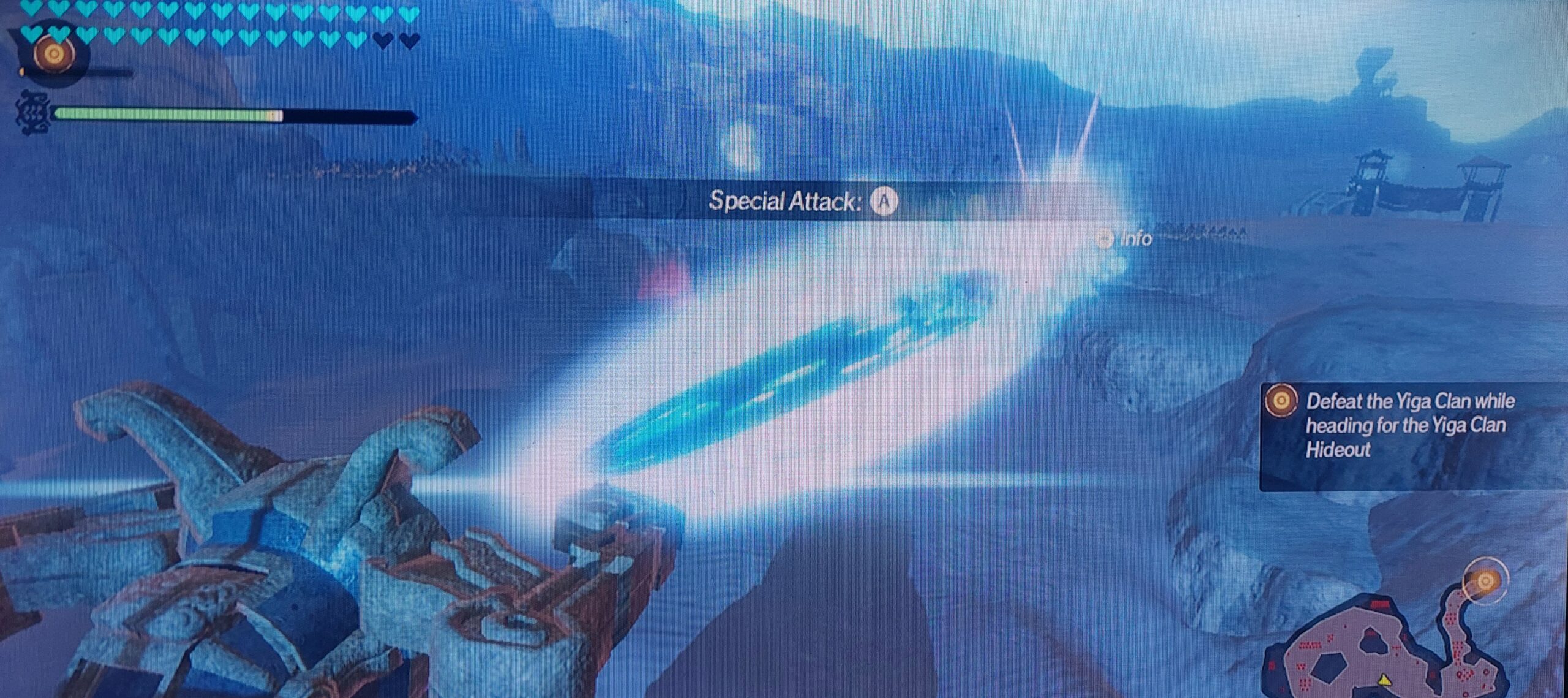
For anyone who’s played Hyrule Warriors: Age of Calamity, you’ll probably agree that one of the best parts of the game isn’t just when Link finally claims the Master Sword or when you get to fight alongside the four Champions and Impa, who, might I add, have some of the most colorful attacks in the entire game. No, one of the game’s biggest highlights is piloting the Divine Beasts.
Over the years, I’ve seen plenty of gamers debate which of these four ancient behemoths is the best. After taking control of all four and unleashing my own brand of holy havoc upon the enemy ranks, I can honestly say there’s no meaningful way to decide which one is the best—or the worst.
If I’m being honest, and at the risk of sounding a little snooty, these ancient moving mountains are above that kind of comparison. From my experience, every Divine Beast has its own strengths, weaknesses, and personality, but more on that in a moment. What I discovered is that there isn’t one Divine Beast that stands above the others. They each offer something completely different.
Today, I want to explain why no two Divine Beasts are alike in any way, shape, or form. By the end of this article, I hope you’ll appreciate each Divine Beast for its own unique strengths and the role it plays in making Hyrule Warriors: Age of Calamity such an unforgettable experience.
The Divine Difference –
You know, the highlight of piloting the Divine Beasts isn’t simply how they destroy your enemies. It’s that each one offers something the others don’t. Take Vah Medoh, for example. While piloting it, I was taking down enemies high above the battlefield instead of those on the ground.
I have to admit, I was a little overwhelmed at first while flying alongside Revali, but one thing became crystal clear. If you approach these ancient machines with the mindset of driving a go-kart or even a race car, you’re in for the rudest awakening of your little life.
The thing is, not every Divine Beast handles combat the same way, and adapting to those differences falls entirely on you. For example, while piloting Vah Rudania, I had to rely on its Counter ability to stop incoming projectiles. The other three Divine Beasts, however, could generate protective barriers.
Defending against something as massive as a fireball the size of a meteor became a matter of timing. Here’s a tip from my experience: if you’re trying to decide between attacking and defending while using one of the Divine Beasts equipped with a barrier, keep the barrier active as you continue attacking. I did this with Vah Medoh and Vah Ruta, and it worked surprisingly well.
One of the things I enjoyed most about piloting each Divine Beast was discovering how differently they approached battle. Vah Naboris, for example, unleashed its Lightning Onslaught, an area-wide attack that wiped out everything beneath its blinding white light.
If you happened to be standing under that light, it was already too late. Just think about that for a moment—a seventy-foot camel calling down a storm of lightning across the battlefield. That’s definitely not the kind of power I’d ever take lightly.
The Beastest With the Mostest –
What made my time inside Vah Rudania so memorable wasn’t simply the havoc I got to unleash upon my enemies—it was the experience of piloting it in the first place. You see, I had already played and beaten The Legend of Zelda: Breath of the Wild before picking up Hyrule Warriors: Age of Calamity.
I knew the Divine Beasts had Champions who piloted them and fought to protect Hyrule, but nothing prepared me for what it actually felt like when I climbed into the driver’s seat myself. For about twenty seconds, as everything around me came into focus, my entire world stopped.
By the time I reached my third and fourth Divine Beast, I was already familiar with what awaited me. Not to trivialize the experience, but by your second Divine Beast, you begin to feel comfortable with the controls.
Vah Naboris quickly became one of my favorites to pilot because of how naturally everything came together. The controls felt responsive, and they didn’t apologize for being easy—they shouldn’t have.
Whether it was because I had already become familiar with piloting Divine Beasts or simply because Naboris was designed differently, I found it much easier to target and eliminate enemies than I did with Vah Medoh, where I constantly found myself changing viewpoints to keep enemies in sight.
Then there was Vah Ruta, which felt less like an ancient machine and more like a moving tidal wave sweeping across the battlefield. Ruta had one incredible advantage: anything touched by its freezing power stopped in its tracks. That brief moment of control created the perfect opportunity to press your advantage and overwhelm the enemy.
Every Divine Beast made me feel powerful, but never to the point where I believed I was invincible. Instead, they made me feel like I had unimaginable power resting at my fingertips.
So, if the day ever comes when you read this article and see me discussing all four Divine Beasts, don’t mistake it for a comparison or a ranking.
As I said before, these ancient monstrosities are above that kind of pointlessness. Instead, appreciate each one for the incredible power it brings to the battlefield and the unique experience it offers the player.
Conclusion –
To wrap things up, piloting all four Divine Beasts is an experience unlike anything else you’ll find in gaming, at least in my opinion. I honestly believe that was Nintendo’s intention. It wasn’t just about enjoying Hyrule Warriors: Age of Calamity, but also about giving players a deeper appreciation for the events leading into The Legend of Zelda: Breath of the Wild.
You might be thinking, “Why should I care about these ancient behemoths?” Because it’s not every day a game hands you the controls to living mountains capable of reshaping an entire battlefield. The experience changes the way you think about power. That’s a personal Roddy guarantee.
Each Divine Beast is awesome in its own way. There’s no, “Naboris is better because of its lightning attacks,” or, “Medoh is number one because it can dominate both the air and the ground.” None of that. Every Divine Beast has its own strengths, its own limitations, and its own unforgettable moments.
For me, piloting all four taught me to appreciate the experience instead of trying to crown a winner. Enjoy the game as a whole, not just the Divine Beast sections, because together they create one of the most memorable experiences Hyrule Warriors: Age of Calamity has to offer.
After piloting all four Divine Beasts, I came away with an even greater appreciation for Hyrule Warriors: Age of Calamity and the Zelda universe as a whole. If you’re looking to continue your adventure beyond the battlefield, I’ve put together a collection of games, accessories, and Zelda collectibles that I think every fan should check out on my Benable.
https://benable.com/RoddyMcG/the-best-zelda-gear-for-hyrule-warriors-age-of-calamity-fans
Leave a Reply