

Intro –
Modern RPGs have done something that just about every gamer wanted growing up: they’ve given us massive worlds capable of keeping us entertained for hundreds of hours.
On paper, that sounds amazing.
But as the saying goes, bigger isn’t always better.
As kids, many of us played RPGs because we knew what to expect when it came to gameplay and progression. Older RPGs respected our time differently. You picked up the controller, figured things out naturally, and kept moving forward.
Modern RPGs, however, often consume your time through gigantic world maps, endless exploration, and trying to figure out where exactly you’re supposed to go next.
And let’s not forget the side content.
Modern RPGs are packed with side quests and optional objectives that are supposedly there to ease players into the gameplay experience.
But when combined with oversized tutorials that sometimes treat experienced gamers like complete beginners, replaying these games can start feeling exhausting.
You finish the game once and think:
“That was great… but I’m probably never doing all of that again.”
Elden Ring is a perfect example of this.
You’re constantly climbing mountains, exploring massive regions, and preparing yourself for whatever challenge might be waiting around the next corner.
The game rewards exploration, but at times the sheer scale of that exploration can become overwhelming.
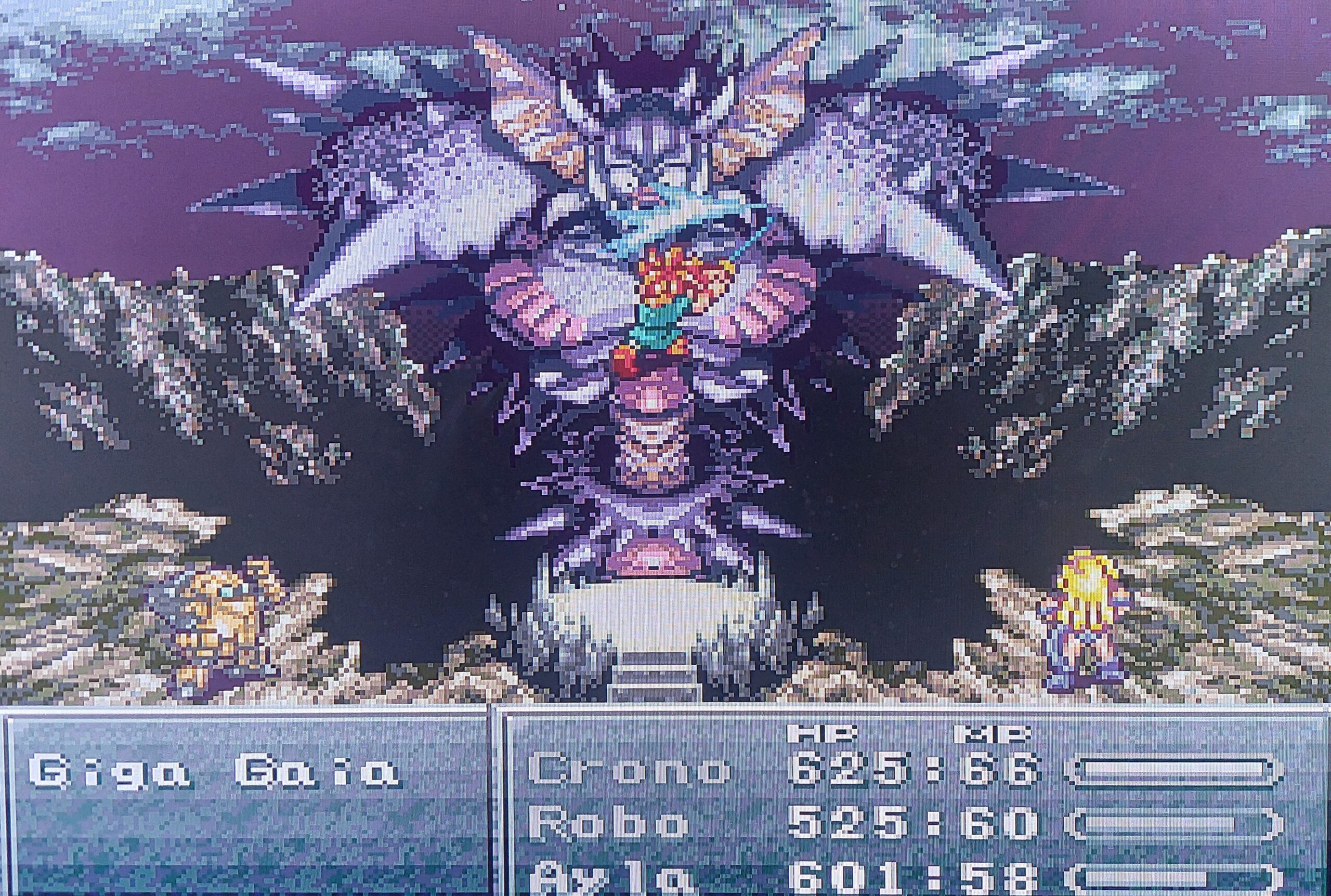
Meanwhile, older RPGs like Chrono Trigger handled progression very differently.
You entered a new area and immediately understood two things:
- you were expected to figure things out yourself
- and if you got yourself into trouble, you had to get yourself back out
There were no massive tutorials constantly interrupting the gameplay. The game trusted you to learn naturally.
And surprisingly enough, Chrono Trigger rarely required heavy grinding either.
When I first played it as a teenager, I used to overprepare constantly because I thought grinding levels was necessary. But replaying it later made me realize that most of that grinding was actually overkill.
Phantasy Star IV worked similarly.
The game usually made it clear when you had wandered somewhere you weren’t ready for yet. If you entered a dangerous area too early and got destroyed, that was the game warning you that you crossed the line.
Modern RPGs often handle progression differently.
Even a game I genuinely enjoy like Final Fantasy XVI can sometimes overwhelm players with scale, world design, and preparation systems that make replaying the experience feel more intimidating than exciting.
That’s part of why players still revisit games like Chrono Trigger decades later.
The progression feels clean.
The pacing feels focused.
And the gameplay rarely feels unnecessarily complicated.
The same thing applies to Phantasy Star IV. Traveling between planets, progressing through the story, and engaging with the gameplay systems all feel streamlined in a way that still holds up beautifully today.
And honestly, the emotional momentum of those older RPGs plays a huge role too.
They constantly pushed you forward.
Modern RPGs, on the other hand, sometimes feel exhausting to replay because of how much preparation they demand from the player.
When I think about replaying Elden Ring, part of me immediately thinks about:
- fighting Radahn again
- preparing for Malenia
- navigating huge areas like Raya Lucaria Academy
- or dealing with bosses like Commander Niall
And while overcoming those challenges can feel rewarding, the amount of preparation required can sometimes make replaying the game feel more stressful than exciting.
Older RPGs often gave players a much simpler gameplay loop:
walk forward, explore naturally, learn the systems, and progress steadily.
Modern RPGs sometimes expect players to constantly overprepare just to feel ready for the next major challenge.
And while realism and scale can absolutely make modern games impressive, they can also make replaying them feel overwhelming in ways many older RPGs never did.
Modern RPGs Are So Massive Now –
Now, I think most gamers can agree on one thing:
RPG worlds have become absolutely massive over the last 30 years.
And while that isn’t necessarily a bad thing, there’s definitely a difference between the scale of older RPGs like Final Fantasy VII or Chrono Cross compared to modern RPGs like Final Fantasy XVI or Elden Ring.
Elden Ring is one of those games where you genuinely feel like you’re getting your money’s worth.
The world is enormous.
There are hidden areas everywhere.
Collectibles are scattered across the landscape.
And exploration constantly rewards curiosity.
Part of what makes the game exciting is knowing that somewhere out there might be:
- a weapon
- a spell
- an item
- or a hidden area
that completely changes how powerful your character becomes.
But at the same time, there’s still the reality of actually getting there.
And sometimes that freedom can become overwhelming.
The larger the world becomes, the more time players spend navigating it, preparing for danger, and figuring out where you’re even supposed to go next.
Older RPGs approached world design very differently.
In Chrono Trigger, for example, the maps felt distinct and separated cleanly from one another. Every location felt memorable because the game stayed focused.
Even areas like Zeal in 12,000 B.C. felt large and mysterious without becoming exhausting to navigate.
The same thing applies to the Home and Another Worlds in Chrono Cross.
Exploring those maps felt exciting because players were curious about what changed between timelines, not because the game overwhelmed them with scale.
Modern RPGs sometimes push scale so far that exploration begins feeling stressful instead of exciting.
In Elden Ring, for example, you can wander into an area with enemies capable of killing you almost instantly before you even realize you crossed into dangerous territory.
That kind of freedom can be thrilling, but it can also make the world feel intimidating in ways older RPGs usually avoided.
And honestly, as adults, gigantic RPG worlds can feel even more overwhelming because our available gaming time is much smaller now than it used to be.
Yes, discovering collectibles and powerful upgrades still feels rewarding. Dodging danger and finding hidden treasures can absolutely make exploration worthwhile.
But huge RPG worlds also create a constant feeling of:
“What’s over there?”
Even when players know they probably shouldn’t wander too far off course yet.
That’s part of what makes modern RPGs feel both impressive and exhausting at the same time.
The Witcher 3: Wild Hunt is another great example of this balance.
Its side quests are some of the best in modern gaming because they slowly pull players deeper into the world and characters naturally over time.
But eventually, the sheer amount of side content can become overwhelming too.
At some point, players can start feeling like the side quests are the game itself.
And while that amount of content is undeniably impressive, it also shows how modern RPGs sometimes sacrifice focus in exchange for scale.
Modern RPGs Sometimes Sacrifice Focus for Scale –
I remember the first time I played Final Fantasy XVI, I felt a little overwhelmed almost immediately.
And honestly, the tutorials at the beginning didn’t help much.
Now don’t get me wrong — I understand why modern RPGs include tutorials. Developers want players to fully understand the mechanics so success feels more achievable.
But sometimes, figuring things out naturally like we did in older RPGs is part of the fun too.
One of the biggest problems modern RPGs sometimes have is overexplaining even the simplest mechanics.
Older RPGs often trusted players to experiment and learn naturally through gameplay.
Modern games, by comparison, can sometimes interrupt the experience constantly just to explain things players probably would have figured out on their own anyway such is the law of the west.
I really started feeling this while playing the Echoes of the Fallen DLC in Final Fantasy XVI.
When I entered the Sage Spire, it genuinely felt like I was walking around for hours.
Sure, I was fighting enemies along the way, but after a while even those battles started feeling more like filler than meaningful encounters. The dungeon itself looked impressive, but eventually I reached a point where I started thinking:
“I’ll finish this later.”
And that’s important.
Older RPGs usually kept momentum moving forward. Modern RPGs sometimes stretch content so far that players begin mentally checking out before they actually finish what they’re doing.
By the time I completed the first DLC, I honestly needed a break before even starting the Leviathan DLC.
That’s another thing modern RPGs struggle with sometimes:
content overload.
Even DLC expansions today can feel massive enough to become full-length experiences on their own, which can make the overall game feel overstuffed rather than exciting.
Meanwhile, older RPGs handled pacing very differently.
When you played something like Shining Force II, you promoted your characters, prepared your team, and pushed toward the next battle naturally.
There was momentum.
You always felt like:
“I’m getting through this tonight.”
That kind of pacing kept players engaged.
Modern RPGs often interrupt that momentum with:
- oversized dungeons
- excessive travel time
- constant side content
- and checklist-style progression systems
The Witcher 3: Wild Hunt is a good example of both the strengths and weaknesses of modern RPG design.
The side quests are excellent. Crafting new armor, learning abilities, and slowly growing stronger all feel rewarding.
But eventually, the sheer amount of content starts becoming intimidating.
You finish one set of quests only to remember:
- there are more quests across the map
- more unexplored regions
- stronger enemies waiting elsewhere
- and entire sections of the world you may not even be prepared for yet
And while that level of scale is undeniably impressive, it can also make progression feel exhausting instead of exciting.
That’s the strange balancing act modern RPGs face today:
they give players more freedom, more content, and more realism than ever before…
…but sometimes that scale comes at the cost of pacing and replayability.
Older RPGs Were Smaller, But More Memorable –
You know why older RPGs stayed memorable long after their time?
Because their focus was centered almost entirely around entertainment value, emotional momentum, and meaningful progression — all within much smaller worlds.
Take Zeal in Chrono Trigger for example.
Compared to modern RPGs, Zeal is actually a relatively small area. But despite its size, the world still felt mysterious and memorable because the game stayed focused.
You had a handful of important locations to visit, but not every single area was overloaded with distractions or unnecessary filler.
Even when the game temporarily blocked progression, it still felt purposeful because it maintained momentum.
The same thing applies to Final Fantasy VI.
When you first arrive in Narshe, the game keeps much of the world closed off intentionally.
Instead of overwhelming players with endless exploration immediately, the game keeps your attention focused on the immediate objective: finding the Esper, Valigarmanda.
That kind of focused progression is something older RPGs handled extremely well.
Then you have games like Phantasy Star IV, where even the music contributes to the game’s identity. The soundtrack, pacing, and progression all work together to create an experience that sticks with players long after they finish it.
Modern RPGs are impressive in their own ways, but many of them still struggle to recreate the natural charm older RPGs had.
That’s one of the reasons I still enjoy replaying Wild Arms 5.
The progression always felt simple and understandable. You usually knew where to go next, but the game still rewarded exploration and planning naturally.
For example, before I even begin the TF System Towers portion of the game, I usually complete the treasure hunt involving the hidden chests scattered throughout Gaia.
And even that system respected progression logic.
Some areas could only be accessed later once you gained control of Asgard, which naturally encouraged players to revisit earlier regions without making exploration feel overwhelming.
That kind of design created structure without sacrificing curiosity.
When I replay games like Chrono Cross, Wild Arms 5, or Phantasy Star IV today, one thing immediately stands out: the pacing.
Those games made it feel like you had all the time in the world to enjoy the adventure without constantly overwhelming you with distractions.
And honestly, that’s something many modern RPGs still struggle to replicate.
No matter which older RPG you revisit, one thing usually becomes clear: those games understood emotional momentum.
They knew when to:
- slow down
- speed up
- raise the stakes
- or push the player forward emotionally
Take Alys’ death in Phantasy Star IV.
That moment isn’t just shocking because of the loss itself. It completely changes the tone and momentum of the game. Suddenly, Chaz is forced to stop leaning on Alys and begin making his own decisions.
That emotional turning point pushes both the gameplay and the story into a completely different gear.
And older RPGs consistently understood how powerful moments like that could be without needing gigantic worlds or endless filler content to support them.
Bigger Games Don’t Always Create Better Memories –
Revisiting my favorite RPG of all time, Chrono Trigger, one of my strongest memories is the first time I reached the Kingdom of Zeal.
I was 15 years old, standing in a kingdom floating above the clouds.
At that age, Zeal honestly felt like my idea of what heaven might look like after death. The music, the atmosphere, the mystery of the place — it all stayed with me long after I turned the game off.
That’s the kind of emotional memory older RPGs created.
I still remember the first time I fought the fully evolved Lavos Spawn and thinking:
“It’s going to be a LONG time before I play this game again.”
That battle felt like a nightmare at the time.
But strangely enough, those difficult moments are part of what made the experience memorable.
The same thing applies to Final Fantasy VI and Terra’s Esper form.
One of my favorite memories in that game was finally unleashing Terra’s full power against Humbaba.
No restrictions.
No limitations.
Just pure, overwhelming power.
Moments like that are unforgettable because they feel earned.
And honestly, that battle represented more than just gameplay. It symbolized Terra fully embracing her strength and finding something worth fighting for beyond simply existing as a weapon.
That emotional connection is what makes older RPG moments stay with players for decades.
The same thing happens with Chrono Trigger and Crono’s sacrifice.
Every time I replay the game, that moment still feels like the ending of one chapter and the beginning of another entirely. It completely changes the emotional direction of the story.
And then there’s the replayability.
Chrono Trigger’s multiple endings alone are enough to keep players coming back years later because the game constantly rewards curiosity without overwhelming the player.
That’s something many modern RPGs still struggle with.
When you look at massive games like Elden Ring, the sheer number of locations, dungeons, and optional paths can honestly become overwhelming after a while.
The world is impressive, but bigger worlds don’t automatically create more memorable experiences.
Sometimes players remember emotional moments, story beats, and gameplay triumphs far more than gigantic maps stretching endlessly in every direction.
And honestly, that’s one of the biggest strengths older RPGs still have today.
They understood that memorable moments matter more than world size ever could.
Conclusion –
So my biggest takeaway from all of this is that modern RPGs are still impressive in their own right.
They give players:
- massive worlds
- enormous amounts of content
- lengthy DLC expansions
- huge maps
- and hundreds of hours of gameplay
And honestly, that’s not a bad thing.
If gamers are spending premium money on modern RPGs, it makes sense that developers want players to feel like they’re getting the most value possible for their purchase.
Modern RPGs absolutely succeed at delivering scale.
But at the same time, older RPGs often succeeded in something even more important: creating memorable emotional experiences without overwhelming the player.
Older RPGs respected player time differently.
They stayed focused.
When you look at games like Chrono Trigger, the progression rarely feels bloated or overcomplicated.
Take Lab 32 in 2300 A.D. for example.
The game doesn’t constantly tell you exactly where to go or overload you with objectives. Instead, it naturally points players toward the next destination while still allowing room for exploration and discovery.
Even optional content like Death Peak feels purposeful instead of overwhelming.
The game trusts players to figure things out naturally.
That kind of focused design is something many modern RPGs struggle to maintain because their worlds are so much larger and more complex.
Older RPGs also understood how to create emotional attachment through pacing and memorable moments.
Revisiting places like Keeper’s Dome or meeting Belthasar later to obtain the Wings of Time never felt repetitive because those moments carried emotional weight alongside the gameplay progression.
That’s part of why older RPGs still stay with players decades later.
Modern RPGs may offer bigger worlds and more content, but older RPGs understood how to keep things simple while still creating unforgettable memories.
And honestly, that simplicity is part of what still makes them so replayable today.
Because in the end, bigger worlds don’t always create better experiences.
Sometimes the most memorable RPGs are the ones that respected your time, kept their focus, and gave players moments they would never forget.
Next up: Why some games become comfort games we replay for years.
https://benable.com/RoddyMcG/rpgs-that-prove-bigger-doesn-t-always-mean-better-0c